

Ingredients to avoid in natural baby hair products
Ingredients to Skip in Natural Baby Hair Products: What to Avoid and Why
If you have ever stood in the baby aisle wondering whether a “gentle” baby shampoo is actually gentle, you are not alone. Understanding what sits behind Ingredients to avoid in natural baby hair products helps you sort marketing from meaning and choose products that support a calm baby scalp.
This guide explains which label terms matter, which ingredients tend to trigger irritation, and how to build a simple kid hair care routine that rinses clean without stripping.
Quick Reference: Ingredients at a Glance
| Ingredient Category | Avoid ✗ | Gentler Alternatives ✓ |
|---|---|---|
| Cleansers (Surfactants) | SLS, SLES (Sulfates), DEA, TEA | Coco-glucoside, Decyl glucoside |
| Preservatives | DMDM Hydantoin, Parabens, MI/MCI | Sodium Benzoate, Potassium Sorbate |
| Fragrance & Scent | "Fragrance", "Parfum", Essential Oils | Fragrance-free, Aloe Vera, Chamomile |
| Conditioning & Aids | Denatured Alcohol, Artificial Dyes | Panthenol (B5), Glycerin, Shea Butter |
Why Ingredient Scrutiny Matters for Baby Hair and Scalp
A baby scalp has a thinner skin barrier than adult skin, which can make it more reactive to surfactants, foaming agents, and complex fragrance blends. Because babies also have a higher surface-area-to-body-weight ratio, even “small” exposures can feel like a lot when a product is used frequently.
“Natural” can be a useful starting point, but it is not a tightly regulated claim for personal care in many markets. “Clean” labels also vary by brand, so the ingredient list and INCI (International Nomenclature of Cosmetic Ingredients) names are what you should verify, not just front-label promises.
The goal is practical: reduce common irritant and allergen triggers, avoid known contaminant risks, and pick formulas that rinse thoroughly without leaving heavy buildup. For many families, that means choosing fewer ingredients, milder cleansing systems, and fragrance-free options first.
Natural vs. Non-Toxic vs. Hypoallergenic: Quick Definitions
“Natural” doesn’t guarantee gentleness, because botanical extracts and essential oils can still be potent allergens for sensitive skin. A “natural” baby conditioner or baby hair oil can irritate just as easily as a synthetic formula if it is heavily fragranced or extract-heavy.
“Hypoallergenic” is not a universal standard, and brands may define it differently. In real life, fragrance-free choices, shorter INCI lists, and a simple patch test often matter more than the word “hypoallergenic” on the front.
When to Talk to a Pediatrician or Dermatologist
Get medical guidance if you see persistent flaking, oozing, swelling, hives, or worsening cradle cap despite gentle care. These can signal eczema, contact dermatitis, infection, or an allergic reaction that needs targeted treatment.
If your child has known allergies or recurrent eczema, choose simpler formulas and introduce one product at a time. A clinician can also help you distinguish dry scalp from cradle cap and recommend appropriate frequency and treatment.
High-Risk Ingredients Commonly Found in “Natural” Baby Hair Products
To scan labels faster, it helps to group ingredients by function: cleansers, preservatives, fragrance, and solvents or processing aids. The most common problems come from frequent irritants and sensitizers, plus a few “hidden” risks tied to contaminants.
Also watch for label aliases, since the same ingredient can appear under different INCI names. For example, sulfates can show up as sodium lauryl sulfate (SLS) or sodium laureth sulfate (SLES), and fragrance can appear as fragrance, parfum, or aroma.
⚠ Harsh Cleaners
Look for: SLS, SLES, DEA, TEA, MEA
These sulfates create "big bubbles" but can make the scalp feel tight and dry, especially during long bath times.
✗ Fragrance & Scents
Look for: Parfum, Aroma, Essential Oils
Even natural fragrances can trigger contact dermatitis. Lavender and tea tree oils are frequent allergy culprits for babies.
◼ Preservatives
Look for: DMDM Hydantoin, MI, MCI
Certain preservatives release small amounts of formaldehyde. These are common causes of unexplained rashes and irritation.
☄ Hidden Risks
Look for: PEGs, Benzene, -eth names
Processing aids can leave behind contaminants like 1,4-dioxane. Skip unnecessary aerosols to minimize these risks.
Harsh Cleansers and Foam Boosters
SLS (sodium lauryl sulfate) and SLES (sodium laureth sulfate) are sulfates used as surfactants to create strong foam and remove oils. On a reactive baby scalp, they can feel drying, increase tightness, and aggravate flaking, especially with frequent washing or long bath time contact.
Many babies do better with milder surfactant blends that cleanse without the “squeaky” feeling. If you are comparing a non-toxic baby shampoo to a standard one, look for gentle cleansing agents and a lower-foam feel rather than maximum bubbles.
DEA, TEA, and MEA are foam boosters and pH adjusters that may appear as DEA (diethanolamine) or TEA (triethanolamine). Some parents avoid them due to irritation potential and because they can be part of nitrosamine formation concerns when combined with certain ingredients, so simpler formulas can be easier to troubleshoot.
Fragrance, Essential Oils, and Hidden Allergens
“Fragrance” or “parfum” can represent dozens to hundreds of chemicals, and it is one of the most frequent triggers for irritation and contact dermatitis. Even when a label says “natural fragrance,” it can still include sensitizing components.
Essential oils are natural, but not automatically baby-safe, particularly for leave-on products like baby hair oil or baby conditioner. Common sensitizers include lavender oil and tea tree oil, and some citrus oils can be phototoxic, meaning they can contribute to skin reactions when exposed to sunlight.
If your child has sensitive skin or eczema, fragrance-free is often the simplest way to reduce flare-ups. If you choose scented products, keep them limited to rinse-off use and avoid layering multiple scented items across bath, hair, and lotion.
Preservatives and Formaldehyde-Releasing Agents
Preservatives matter because water-based baby shampoo and conditioner can grow microbes without them. The issue is choosing preservatives with a lower likelihood of sensitization for your child.
Formaldehyde-releasing agents are preservatives that can release small amounts of formaldehyde over time. Families often avoid DMDM hydantoin, imidazolidinyl urea, diazolidinyl urea, and quaternium-15, especially if a child has a history of dermatitis or unexplained rashes.
Isothiazolinones, including methylisothiazolinone (MI) and methylchloroisothiazolinone (MCI), are effective preservatives but are well-known sensitizers. Risk is generally higher in leave-on products, but very sensitive children can react even to rinse-off use, so it is reasonable to avoid MI/MCI when you are troubleshooting irritation.
Parabens and phthalates still come up in parent discussions, sometimes due to broader “avoid” preferences. If you want to limit them, confirm with the INCI list rather than relying on “free-from” claims, and prioritize the ingredients most tied to immediate irritation first, like fragrance and harsh surfactants.
Contaminants and “Unexpected” Ingredients
Benzene is not a typical intentional ingredient in baby hair care, but it has appeared as a contaminant risk in some aerosol products. For babies, it is safest to skip unnecessary aerosols entirely and check recall notices if you use any spray products in the home.
1,4-dioxane is a possible contaminant associated with ethoxylated ingredients, often recognizable by “PEG” or names ending in “-eth” (for example, laureth). If you prefer to minimize this risk, choose brands that test for impurities or publish contaminant-control practices, and consider simpler formulas with fewer ethoxylated components.
Ingredients That Can Be Problematic Depending on Baby’s Skin (Not Always “Bad”)
Not every debated ingredient is universally harmful, and absolutist rules can backfire when a baby needs barrier support. The better approach is to match the formula to your child’s skin, hair texture, and history of reactions.
Buildup is a real issue for fine baby hair, because heavy occlusives can weigh hair down and make the scalp look greasy. On the other hand, some occlusives can protect the skin barrier and reduce water loss when dryness is driving irritation.
Silicones, Mineral Oil, and Petrolatum
Silicones such as dimethicone can reduce tangles and friction, which may help if your child’s hair knots easily. The tradeoff is potential buildup, so you may need occasional gentle cleansing to prevent residue, especially if you use leave-on products.
Mineral oil and petrolatum are effective barriers for some babies, particularly when dryness and friction are the main problem. Others prefer plant oils for personal reasons, but “natural” oils can also irritate, so patch testing is still smart.
Alcohols, Dyes, and Botanical Extract Overload
Not all alcohols are equal: alcohol denat. and isopropyl alcohol can be drying and sting compromised skin, especially around eczema patches. Fatty alcohols, such as cetyl alcohol, are typically conditioning and are not the same as drying solvents.
Colorants and chemical dyes are usually unnecessary in baby products, and they can add avoidable allergy risk. If you are choosing between two similar products, the dye-free option is often the easier choice for reactive scalps.
A long list of botanical extracts can sound appealing, but each extract is another potential allergen exposure. For babies who flare easily, fewer ingredients and fewer “actives” often outperform complex blends.
How to Read a Baby Hair Product Label in 3 Steps
Step 1
Scan for scents. Look for fragrance, parfum, or essential oils. If your baby's skin is reactive, opt for fragrance-free products and avoid aroma blends that act like synthetic perfumes.
Step 2
Identify the cleaners. For dry or reactive scalps, avoid harsh sulfates like SLS and SLES. Look for milder surfactants that cleanse gently without stripping natural oils or making the scalp feel tight.
Step 3
Verify the preservatives. Ignore vague marketing claims and confirm the actual INCI list. This is where you can spot formaldehyde-releasing agents and isothiazolinones (MI/MCI) before they trigger irritation.
Quick “Avoid” Checklist for the Aisle
Fragrance/parfum, especially for sensitive skin or eczema-prone kids. MI/MCI if you are dealing with repeated irritation, plus formaldehyde-releasing agents like DMDM hydantoin and quaternium-15.
Harsh sulfates (SLS, SLES) and unnecessary colorants. If cradle cap or eczema is in the picture, prioritize minimal ingredient lists and “dermatologist-tested” claims, while still doing your own label reading.
What to Look For Instead (Gentler Alternatives)
For cleansing, look for milder surfactants such as coco-glucoside and decyl glucoside. Sodium cocoyl isethionate and sodium lauroyl sarcosinate can also be gentle in well-formulated products, but they are context-dependent, so pay attention to how your child responds.
For support ingredients, glycerin and panthenol are common humectants and conditioners that suit many babies. Colloidal oatmeal and aloe vera can be soothing if tolerated, but introduce them one at a time, since even “soothing” botanicals can be allergens for some children.
Examples, Common Mistakes, and Safer Routine Tips
Scenario: Hairline Redness
If redness appears after switching to a "natural" scented shampoo, swap to a fragrance-free formula first. This clarifies if the trigger is the scent or a specific cleansing agent.
Scenario: Flaky Cradle Cap
Increasing washes often backfires by stripping protective oils. Reduce frequency and shorten bath time to prevent further flaking while seeking professional guidance.
Scenario: Itchy Oil Buildup
Layering heavy oils daily can trap flakes and worsen itchiness. Use less product and ensure a thorough rinse to maintain scalp comfort.
The Oeight Safer Routine Guide
Common Mistakes ✗
- Assuming "natural" always equals "clinically safe".
- Using adult styling products or adult shampoos on delicate skin.
- Layering multiple scented lotions and washes, which can overwhelm the infant’s skin barrier.
The Safer Path ✓
- Lukewarm Water: Avoid hot water that triggers dryness.
- Short Contact: Keep wash times brief to prevent lipid loss.
- Gentle Touch: Use a soft massage instead of scratching or scrubbing.
- Thorough Rinse: Ensure no product residue remains in hair folds.
Example 1: A baby develops redness along the hairline after switching to a “natural” scented baby shampoo. Removing fragrance/parfum and essential oils first often clarifies whether the trigger is scent-related or cleansing-related.
Example 2: A parent increases washing to handle cradle cap, but the scalp gets drier and flakes more. Over-washing can strip protective oils, so reducing frequency and shortening contact time can help while you seek guidance if symptoms persist.
Example 3: A heavy baby hair oil is layered daily, and the scalp looks coated and itchy. Some oils can trap flakes and worsen buildup, so using less product and rinsing thoroughly can improve comfort.
Common mistakes include assuming “natural” equals safe, using adult shampoos or styling products, and layering multiple scented items across hair, body wash, and lotion. A safer routine is simple: lukewarm water, short wash time, gentle massage without scratching, and a thorough rinse.
The Oeight Difference: Clean Solutions for Every Scalp Need
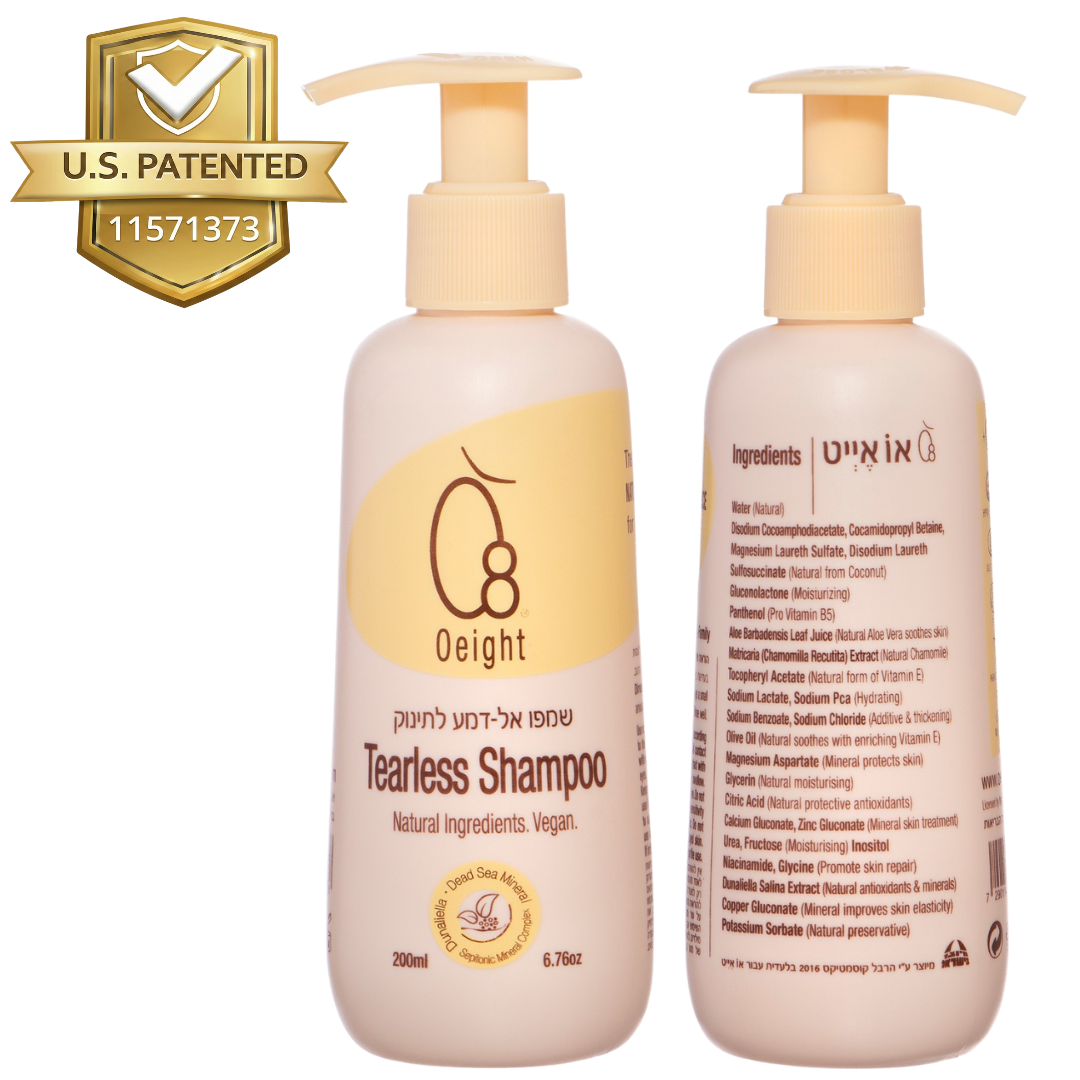
Choosing the right product isn't just about what you avoid—it’s about what you put back into the skin. At Oeight, we’ve simplified the process by formulating our products to meet the strictest "clean" standards while utilizing our patented Dunaliella Salina algae to protect and nourish.

Gentle Baby Soap
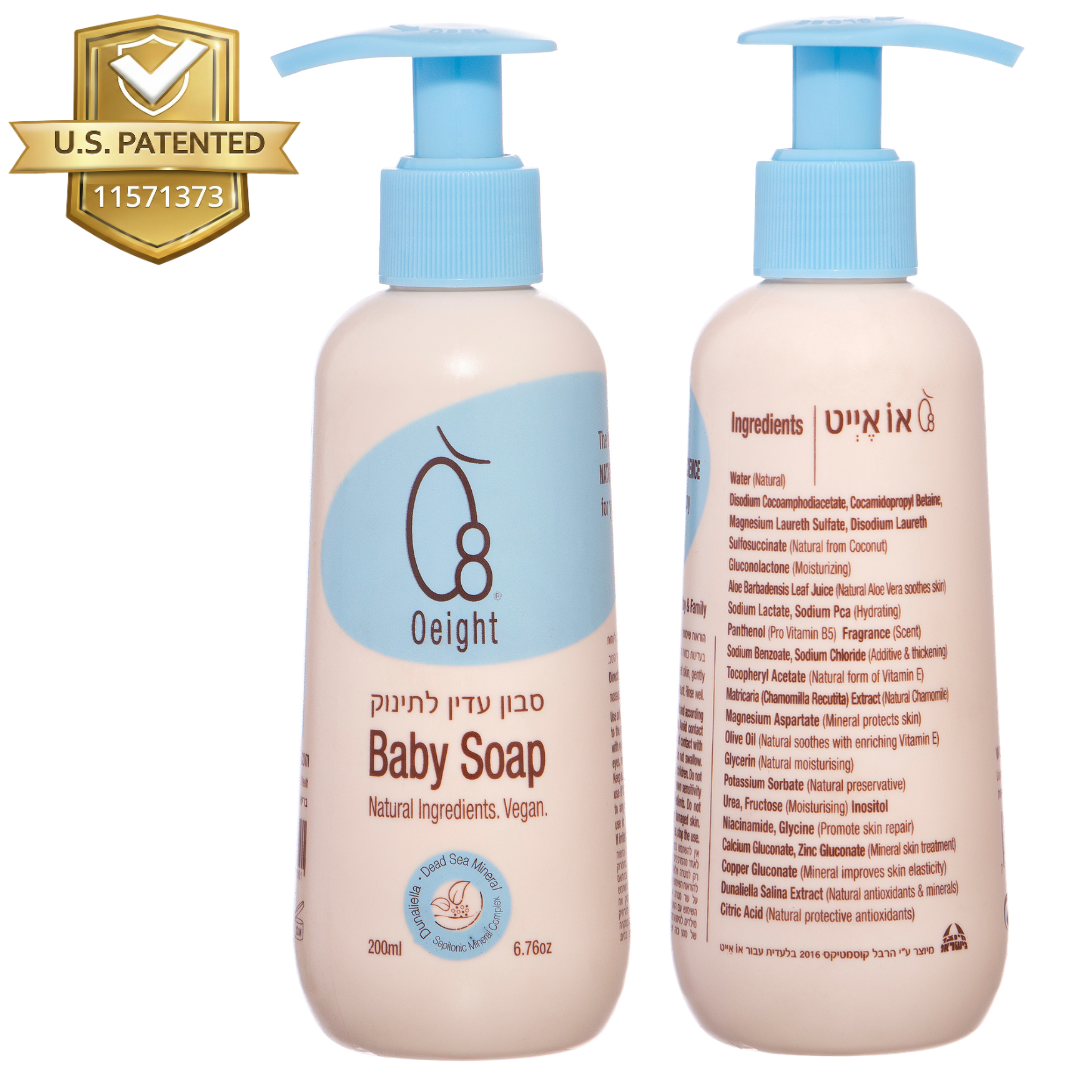
A vegan, SLS-free formula enriched with Dunaliella Salina algae to cleanse without disrupting the skin barrier.
Shop Now
Protective Body Lotion
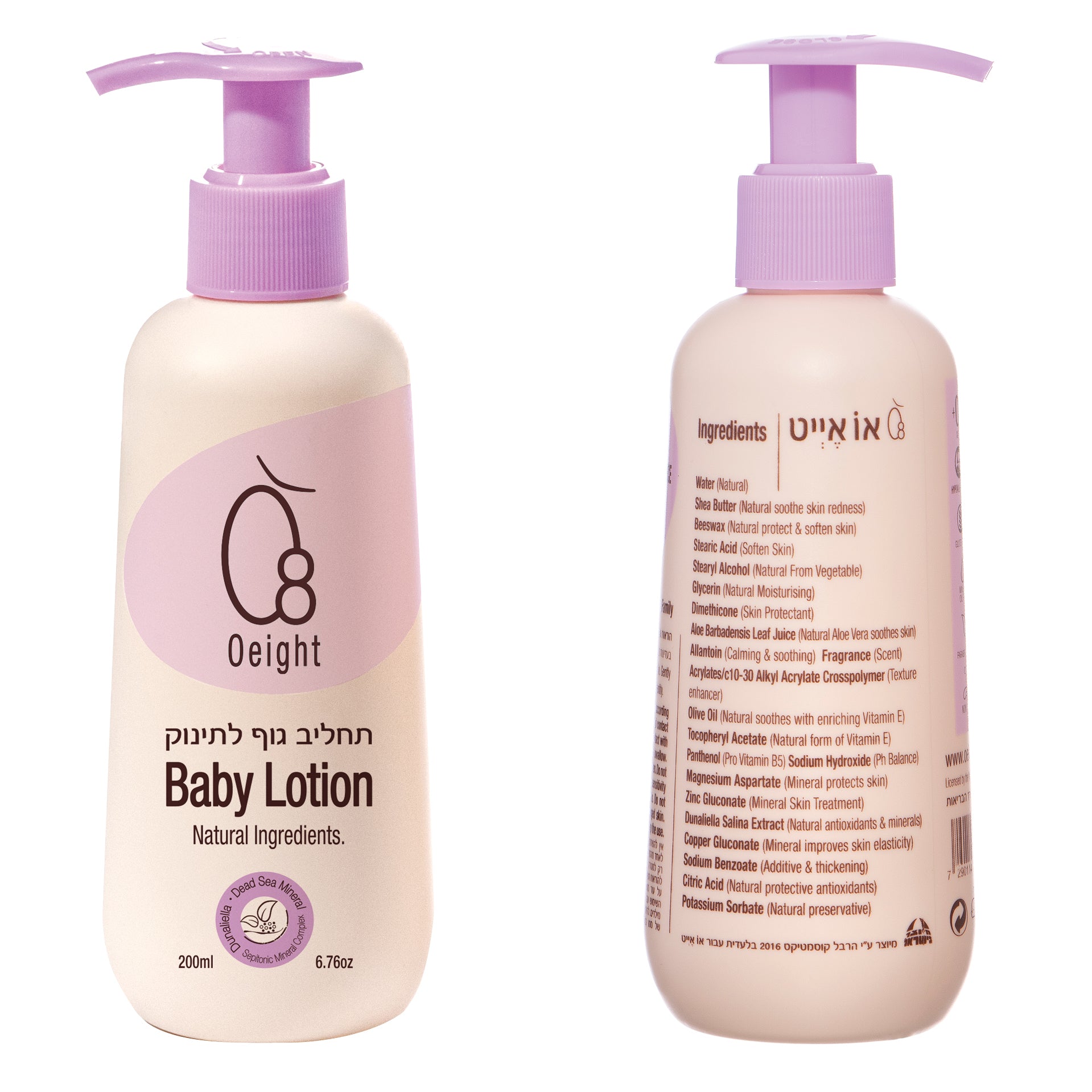
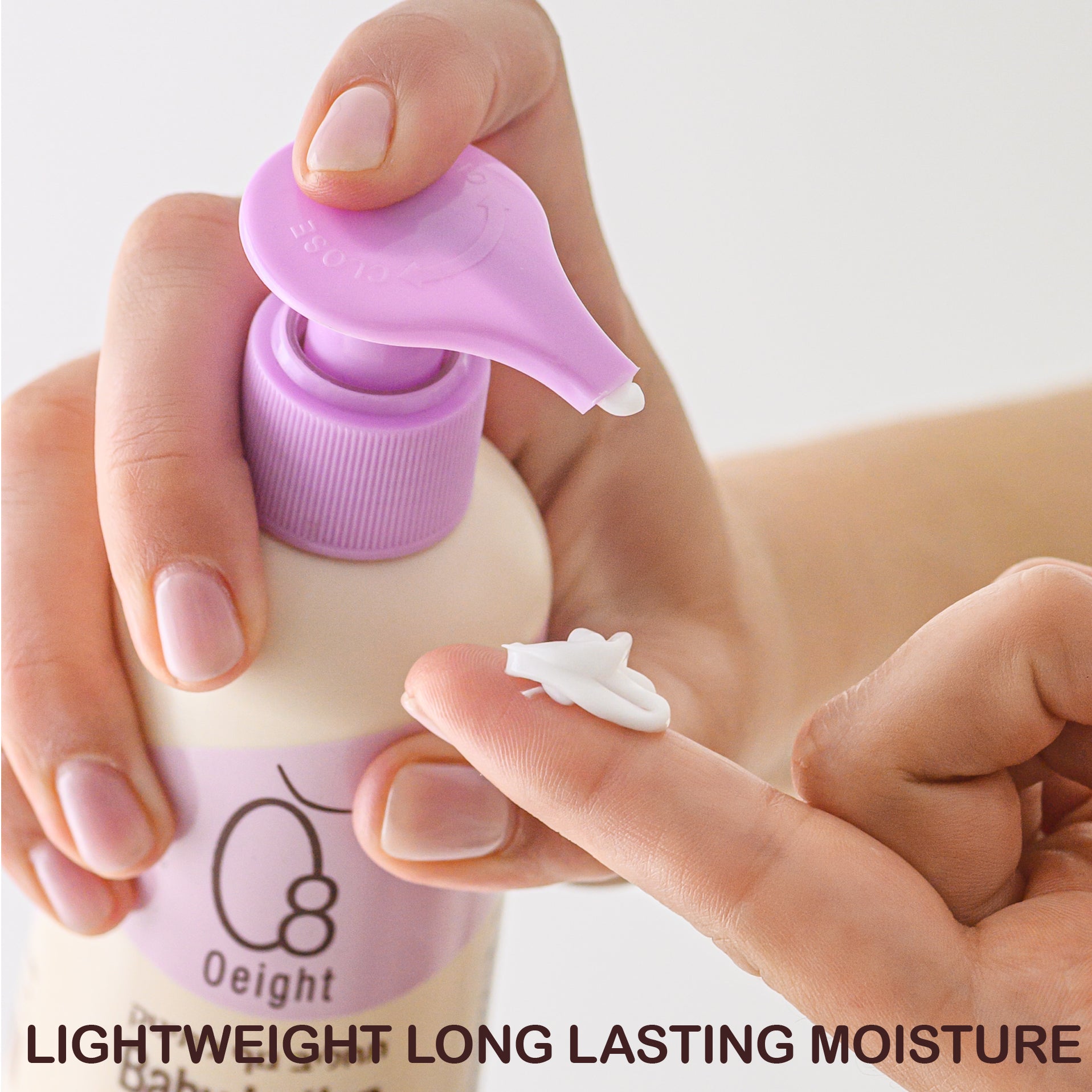
Provides deep hydration with Dead Sea minerals and Shea butter. Absorbs quickly without any greasy residue.
Shop Now
Natural Massage Oil
100% pure cold-pressed almond oil. Fragrance-free to preserve your baby’s natural scent for essential bonding.
Shop Now1. For the Minimalist Routine (Newborn Safe)
If you’re looking to reduce exposure to allergens, start with our fragrance-free essentials.
-
Gentle Baby Body Soap: A vegan, SLS-free formula that cleanses without disrupting the natural pH of a sensitive scalp.
-
Natural Baby Massage Oil: Based on pure cold-pressed sweet almond oil, perfect for cradle cap or post-bath bonding.
2. For Dryness & Barrier Support
When dryness leads to flaking or irritation, you need active hydration that doesn't feel heavy.
-
Oeight Baby Body Lotion: Enriched with Dead Sea minerals, it provides deep moisture without the "buildup" common in traditional lotions.
-
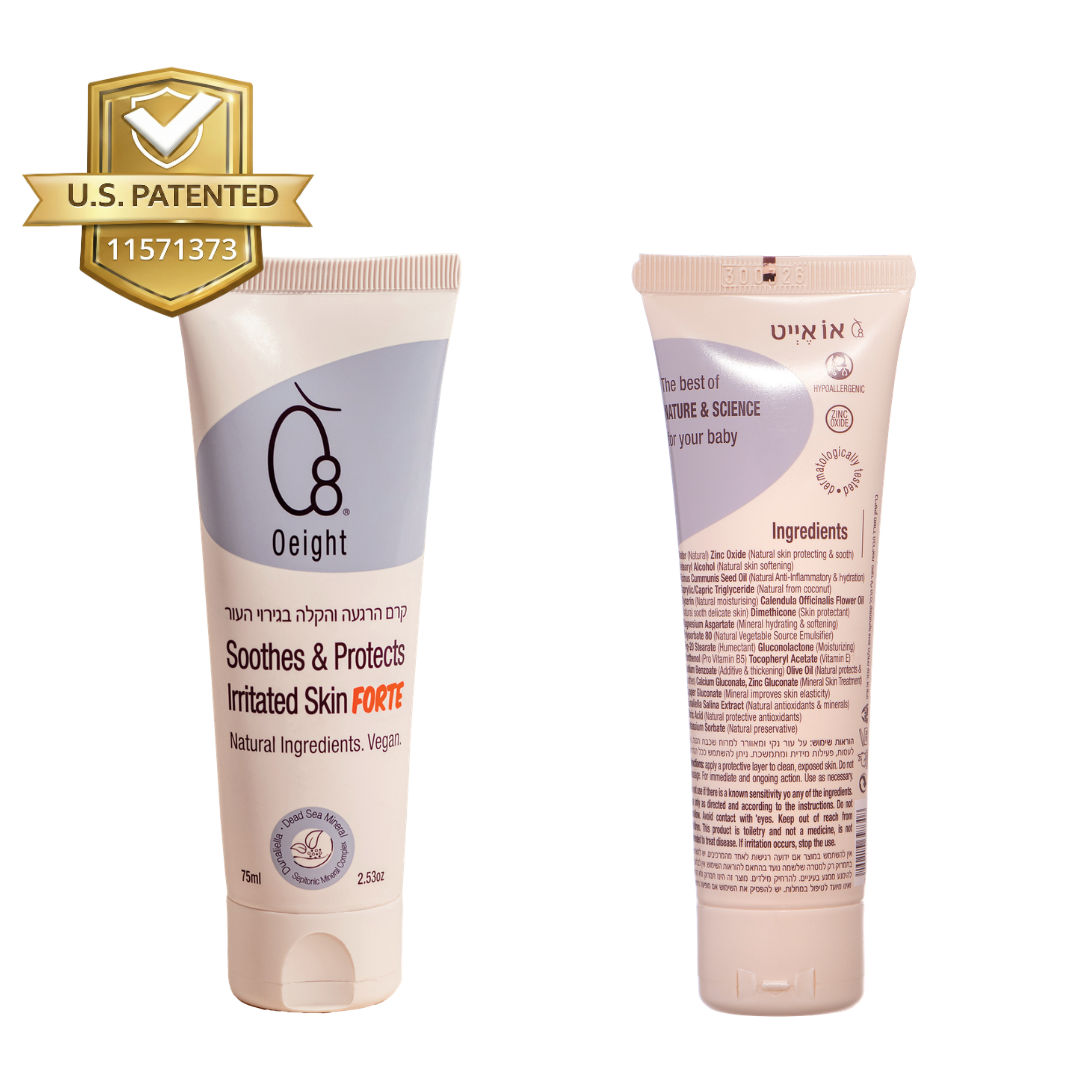
Diaper Rash Cream Forte: For barrier-prone areas, this 100% natural active formula uses Zinc and Calendula to soothe instantly.
3. For the Ultimate Gentle Cleanse
-
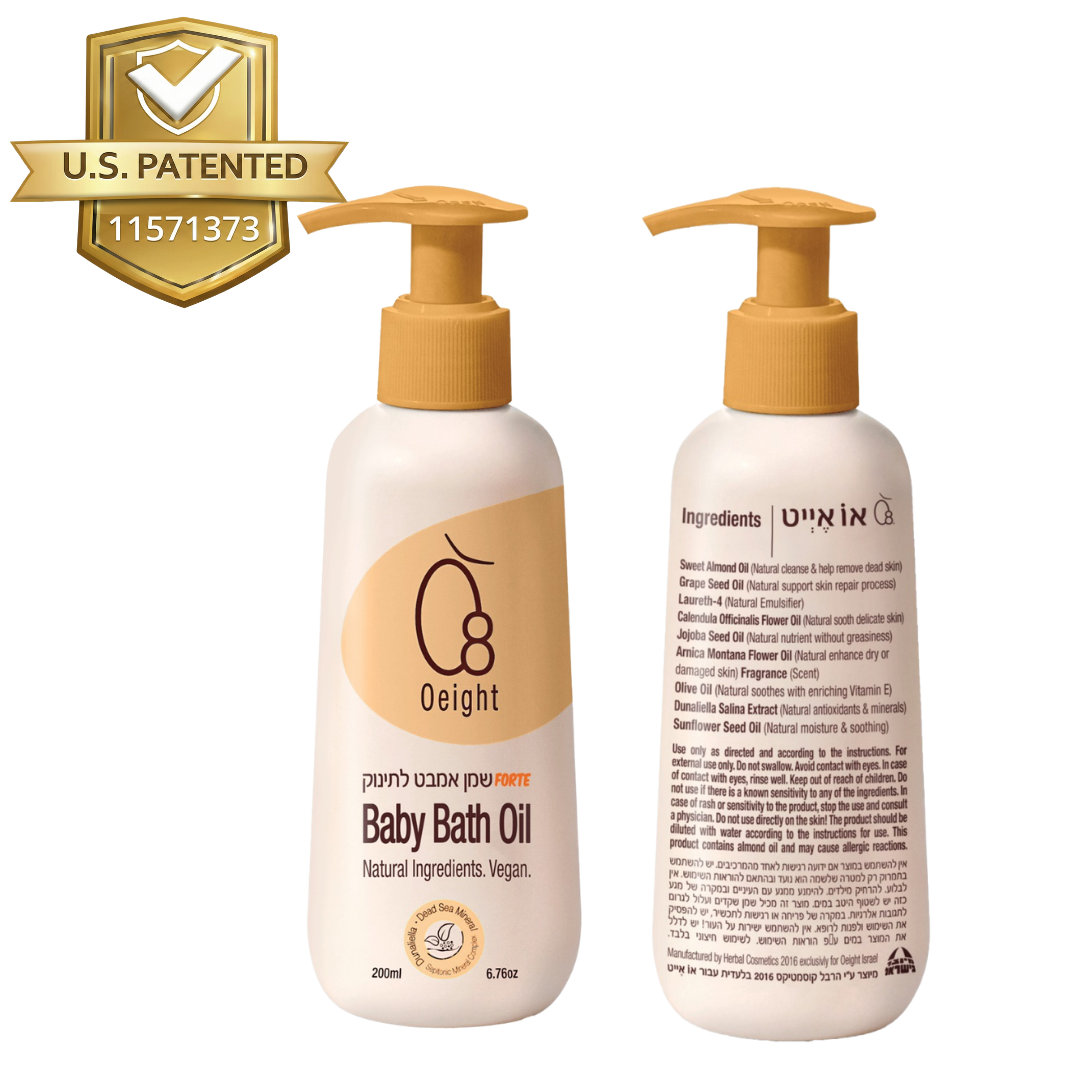
Baby Bath Oil Forte: If your baby has extra-dry skin, our emulsifying oil-based bath step cleanses while replacing lost lipids, making it a favorite for reactive skin types.
The Science of Maturation: Why "Baby Care" Doesn't End at Infancy Many parents assume that once a child starts walking, their skin is as tough as an adult's. However, clinical research indicates that the skin barrier—including its thickness and moisture retention—continues to mature until **around age 6**. Until this stage, children’s skin hasn't reached adult levels of "lipid compactness," making it far more susceptible to external irritants. Key Scientific Differences: • Higher Cell Turnover: Babies and young children have higher cell turnover rates than adults. This means their skin is more "active" and potentially more reactive to harsh chemicals. • A Unique Microbiome: A child’s skin microbiome is fundamentally different from an adult's. It is dominated by bacterial groups like Firmicutes that haven't yet shifted to the adult state. • Facial Sensitivity: Hydration and water loss levels are significantly higher on the face compared to the rest of the body. This sensitivity is why hairline irritation is so common in early childhood. Source: Stamatas et al., "Skin maturation from birth to 10 years of age".
The Science of Maturation: Why "Baby Care" Doesn't End at Infancy
Many parents assume that once a child starts walking, their skin is as tough as an adult's. However, clinical research indicates that the skin barrier—including its thickness and moisture retention—continues to mature until **around age 6**. Until this stage, children’s skin hasn't reached adult levels of "lipid compactness," making it far more susceptible to external irritants.
Key Scientific Differences:
Higher Cell Turnover: Babies and young children have higher cell turnover rates than adults. This means their skin is more "active" and potentially more reactive to harsh chemicals.
A Unique Microbiome: A child’s skin microbiome is fundamentally different from an adult's. It is dominated by bacterial groups like Firmicutes that haven't yet shifted to the adult state.
Facial Sensitivity: Hydration and water loss levels are significantly higher on the face compared to the rest of the body. This sensitivity is why hairline irritation is so common in early childhood.
Source: Stamatas et al., "Skin maturation from birth to 10 years of age".
Patch Testing Basics for Babies
Do a patch test by applying a small amount behind the ear or on the inner arm, then monitor for 24 to 48 hours as practical. Avoid testing on broken skin, and keep the area dry and uncovered when possible.
Stop use if redness, itching, or a rash develops, and contact a clinician for severe reactions or facial swelling. When you introduce a new baby conditioner, baby shampoo, or baby hair oil, add only one new item at a time so you can identify the cause quickly.
FAQ
What ingredients should I avoid in baby products? +
What ingredients should I avoid in kids hair products? +
What ingredients should I avoid in natural hair products? +
What should I not use on baby hair?
Scientific References
Infant Skin Physiology & Barrier Maturation
Skin maturation from birth to 10 years of age: Structure, function, composition and microbiome. Stamatas GN, et al. Journal of Investigative Dermatology (2013).
The Infant Skin Barrier: Can We Preserve, Protect, and Enhance the Barrier? Telofski LS, et al. Dermatology Research and Practice (2012).
Pediatric Skincare Safety & Common Irritants
Allergic Contact Dermatitis in Children: A Review. The Journal of Clinical and Aesthetic Dermatology.