

Best Cream for Baby Eczema on the Face and Cheeks? A Straight Answer, Then the Details
Baby Eczema & Sensitive Skin
Quick answer
The best cream for baby eczema on the face and cheeks is a thick, fragrance-free moisturizing cream that repairs the skin barrier without stinging: something you can reapply three or four times a day without thinking twice about it. Creams beat lotions. Ointments hold moisture longest but look greasy on a face. On cheeks specifically, you want a short ingredient list, no synthetic fragrance, no essential oils, and enough occlusive weight to survive drool.
That is the whole answer. Everything below is the reasoning, the comparisons, and the parts most articles skip.
Key takeaways
- Face eczema is not body eczema. Cheeks get wiped, drooled on, rubbed into car seats, and hit with cold air. The cream has to survive all of it.
- Fragrance-free is non-negotiable. Not "lightly scented." Not "naturally fragranced." None.
- Thicker wins. The American Academy of Dermatology is blunt about this: thick creams and ointments work better than lotions or oils for baby eczema.
- Timing beats the product. Moisturizer within three minutes of a lukewarm bath (the Soak and Seal method) does more than any single formula.
- Most cheek rashes in the first year are not eczema. Drool rash, baby acne, cradle cap, and contact dermatitis all show up on faces and all get misdiagnosed by worried parents at 2 a.m.
- Only a handful of ingredients earn their place: ceramides, colloidal oatmeal, glycerin, shea butter, petrolatum, and barrier-supporting botanicals like Dunaliella Salina.
The 5 best baby eczema face creams in America
A quick note on how this list works. These are the five formulas American parents reach for most often for facial eczema, judged on three things: whether the texture survives a face, whether the ingredient list is clean enough for eczema-prone skin, and whether it holds up under repeated daily use. No affiliate links, no sponsored placement.
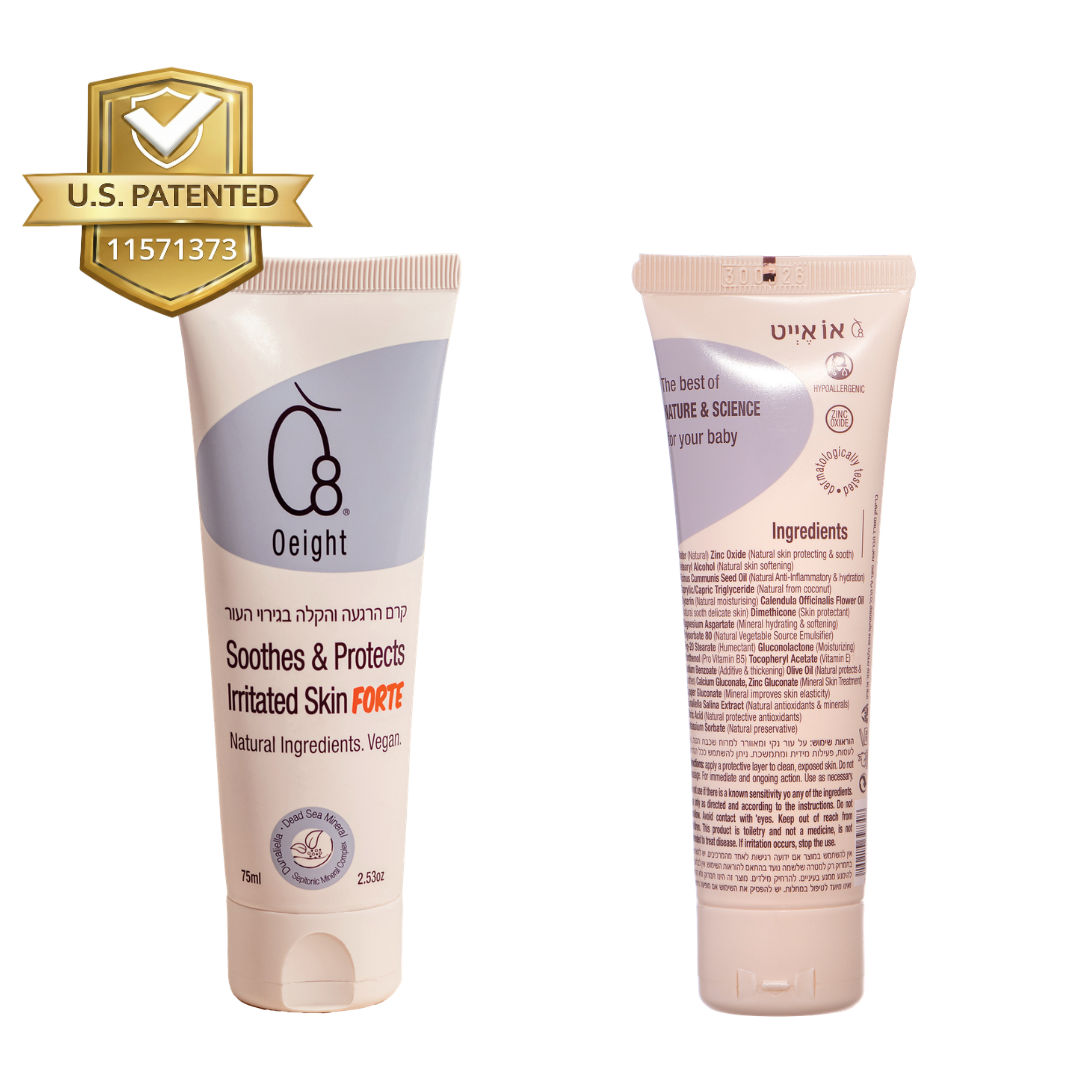
Oeight Soothe & Protect Irritated Skin Forte Cream
Patented FormulaBest for: cheeks that flare, calm down, and flare again
This one is built around a patented Dunaliella Salina extract, a Dead Sea microalgae rich in beta-carotene and antioxidants, paired with zinc oxide, calendula, and vitamin E. The formula runs highly concentrated, which is the point. You use less, and it stays where you put it.
It is fragrance-free in the strict sense: zero synthetic fragrances and no essential oils either, which matters more than most parents realize, since essential oils are one of the more common hidden triggers in "natural" baby products.
What it does well: the all-in-one angle is real. This is a cream that handles facial eczema, drool rash, dry patches, and irritated folds, so you are not juggling four tubes. The packaging is architect-designed, which sounds like marketing until you are opening it one-handed at 3 a.m. with a baby on your hip.
Where to find it: Soothe & Protect Irritated Skin Forte Cream
Aveeno Baby Eczema Therapy Moisturizing Cream
Best for: parents who want an FDA-recognized active ingredient
The 7.3 oz tub with 1% colloidal oatmeal as the active. Colloidal oatmeal is an FDA-recognized skin protectant, which gives this one regulatory backing most baby creams do not have. It carries the National Eczema Association Seal of Acceptance, it is fragrance-free, steroid-free, and it includes vitamin B5.
It is thick. Genuinely thick, closer to a balm than a lotion, and that is why it works on cheeks.
Aveeno Baby Eczema Nighttime Balm is the heavier sibling, with ceramides added, and Aveeno Baby Dermexa emollient cream is the version you will see in international listings.
CeraVe Baby Moisturizing Cream
Best for: ceramide-first barrier repair
CeraVe built its whole reputation on ceramides, and the logic holds up. Babies with eczema often have a genetically weaker skin barrier (the filaggrin story, if you want to go down that rabbit hole), and ceramides are the lipids that barrier is missing. This one adds niacinamide and hyaluronic acid, and it comes in a large tub for a low price.
CeraVe Baby Eczema Cream is the separate, colloidal-oatmeal version if you want the drug-facts active.
Eucerin Baby Eczema Relief Cream
Best for: budget-conscious, widely available, dermatologist-familiar
Colloidal oatmeal plus ceramides plus licorice root extract. Eucerin Baby Eczema Relief Body Cream is the same formula in a larger size. Fragrance-free, dye-free, and stocked in essentially every American pharmacy, which counts for something at 9 p.m. on a Sunday.
Mustela Stelatopia Emollient Face Cream
Best for: a face-specific formula, if you want one
Worth naming because it is one of the few creams actually formulated for the face rather than adapted to it. The 40ml tube is small, the texture is rich, and it is built around sunflower oil distillate and avocado perseose to support the skin barrier. The wider line includes Stelatopia Cleansing Gel, the Stelatopia+ lipid-replenishing cream pump, and Stelatopia intense eczema relief for harder flares.
Also worth knowing about
Not top five, but they come up constantly and some of them deserve the attention:
- Tubby Todd All Over Ointment (get the unscented version, not the scented one)
- Aquaphor Healing Ointment for overnight sealing, petroleum jelly based, the classic "smear it on and forget it" option
- Vanicream Moisturizing Skin Cream, boring, fragrance-free, allergen-free, dermatologist favorite
- Pipette Baby Balm, NEA seal, clean formulation
- Baby Dove Eczema Care Soothing Cream, drugstore accessible
- California Baby Therapeutic Relief Eczema Cream
- Roe Wellness Biome Barrier Cream if you are curious about the skin microbiome angle
- Weleda Baby Derma White Mallow Body Lotion, plant-based, thinner texture
- Child's Farm Oatderma Baby Moisturiser, popular in the UK, increasingly available stateside
How the popular face creams stack up
| Product | Key ingredients | Texture | Fragrance-free | Best use on the face |
|---|---|---|---|---|
| Oeight Soothe & Protect Forte | Dunaliella Salina, zinc oxide, calendula, vitamin E | Concentrated cream | Yes, no essential oils | Recurring flares, drool zone, all-in-one |
| Aveeno Baby Eczema Therapy | 1% colloidal oatmeal, vitamin B5 | Thick cream | Yes | Daily flare management |
| CeraVe Baby Moisturizing Cream | Ceramides, niacinamide, hyaluronic acid, glycerin | Light to medium cream | Yes | Barrier maintenance between flares |
| Eucerin Baby Eczema Relief | Colloidal oatmeal, ceramides, licorice root | Medium cream | Yes | Everyday budget option |
| Mustela Stelatopia Face Cream | Sunflower oil distillate, avocado perseose | Rich emollient cream | Check the specific product | Dedicated facial formula |
| Aquaphor Healing Ointment | Petrolatum, glycerin, panthenol | Ointment | Yes | Overnight sealing only |
Scroll the table sideways on mobile.
Why the face is a different problem
Cheeks are the first place infant eczema shows up
In babies, eczema almost always starts on the face and scalp before it moves anywhere else. The American Academy of Pediatrics puts childhood eczema prevalence at up to 1 in 4 children, and most of those kids see their first patches on the cheeks.
Which makes sense, mechanically. The cheek is exposed, it is the part of the face that meets everything (blankets, car seat straps, a parent's sweater, the crib sheet during the great 4 a.m. face-rubbing session), and it sits directly in the drool path once teething starts.
So the cream you choose has to survive friction, moisture, and a baby who will absolutely lick it.
What baby eczema on the face actually looks like
Dry, rough patches. Redness on lighter skin, and on deeper skin tones more often brown, purple, or grey patches with a slightly ashy, flaky look. Scaly patches. Sometimes tiny bumps. Almost always itchy skin, which you notice as face-rubbing before you notice as scratching.
Inflammation that comes and goes in cycles is the tell. Eczema flare-ups return to the same spots. A one-time rash that clears and never comes back is probably something else.
Things people mistake for facial eczema
Drool rash and perioral eczema
Shiny red patches ringing the mouth and chin during teething. Related, but managed with a barrier, not a treatment cream.
Baby acne
Small pimples, not dry. Peaks around week 4 to 6 and resolves on its own.
Cradle cap
Greasy yellow scale on the scalp and sometimes the eyebrows. Eczema is dry, cradle cap is oily. That is the cleanest distinction.
Contact dermatitis
Sharply bordered, appears where something touched the skin, does not migrate.
Heat rash is the other common mix-up: tiny bumps in covered, sweaty areas. If you are stuck on that one, our guide on how to tell baby eczema from heat rash walks through the differences by location and texture.
The ingredients that actually matter
Most baby eczema cream labels are 40 ingredients long and maybe six of them are doing work. Here is what those six do.
Ceramides
Lipids that make up the mortar between skin cells. Eczema-prone skin runs low on them. Adding them back is genuine barrier repair, not marketing.
Colloidal oatmeal
The only ingredient here the FDA recognizes as an OTC skin protectant. Calms itch, forms a light film. Oat oil and oat extract are the gentler cousins.
Glycerin and hyaluronic acid
Humectants. They pull water into the skin. On their own, in dry air, they can pull moisture out, which is why they always need an occlusive layer over the top.
Petrolatum and petroleum jelly
The most effective occlusive we have, and cheap. Ugly on a face, brilliant overnight.
Shea butter and beeswax
Plant and wax occlusives. Softer feel than petrolatum, better for daytime facial use, slightly less sealing power.
Dunaliella Salina
Dead Sea microalgae with a high beta-carotene and antioxidant load, used in Oeight's patented formulations to support the skin's own regeneration.
Niacinamide, vitamin B5, vitamin E, and calendula make up the supporting cast: calming and anti-inflammatory, useful, not load-bearing.
What to keep off a baby's face
Synthetic fragrance, first and always. Then essential oils, which get a pass they have not earned in the natural skincare world. Then harsh soaps and sulfate cleansers, dyes, and anything with a long list of preservatives you cannot pronounce.
If you want the full method for decoding a label, we broke it down here: how to read a baby skincare label and the ingredients to avoid.
Cream vs ointment vs balm on a baby's face
| Type | Water content | Sealing power | Face verdict |
|---|---|---|---|
| Lotion | High | Low | Skip it for eczema |
| Cream | Medium | Medium to high | Best daily choice for cheeks |
| Emollient cream | Medium to low | High | Good for active flares |
| Balm | Low | High | Good at night, heavy by day |
| Ointment | Very low | Highest | Overnight or severe flares only |
A moisturizing cream is the daytime answer. An ointment or balm is the overnight answer. Anyone who tells you one product covers both is selling something.
How to apply it (this matters more than which tube you buy)
The AAD calls it Soak and Seal, and it is the single highest-return habit in eczema care.
- Lukewarm water, five to ten minutes. Not hot. Hot water strips lipids.
- Mild, fragrance-free cleanser, only where the baby is actually dirty.
- Pat partially dry. Leave the skin damp.
- Apply the cream within three minutes. This is the part people skip.
- Reapply to the face two to four more times a day, especially after eating and after outdoor time.
The AAD's own guidance on bathing and itch relief for eczema covers colloidal oatmeal baths and cool compresses if the itch is winning. For the full bath-time sequence, we wrote it up in the best bath routine for babies with eczema.
Triggers, and the American climate problem
Eczema does not just happen. It is provoked. Common environmental triggers:
- Drool and saliva, the number one facial trigger in teething babies
- Sweating and overheating, especially overdressed babies in car seats
- Pet dander and pollen
- Harsh soaps and scented laundry products. Switch to hypoallergenic laundry detergents and skip fabric softener entirely
- Rough fabrics. Cotton clothing, washed before first wear, is the low-effort fix
- Food allergies, which can worsen eczema in a minority of babies but rarely cause it outright
- Dry indoor air, and this one is regional
If you are raising a baby in Phoenix, AZ
You are fighting different physics than someone in Seattle. Desert air plus year-round air conditioning pulls moisture out of skin continuously. Parents in dry states routinely need a heavier cream and one or two extra applications a day than the label suggests. Humidifier in the nursery set around 50%, and reapply after any time outdoors.
Cold-weather states get the same problem from the other direction: forced-air heating in January is brutally dry.
When a cream is not enough
Moisturizer is the foundation, not the ceiling. Talk to your pediatrician or a pediatric dermatologist if:
- Patches are weeping, crusting, or showing yellow crust (possible infection, this needs a same-week appointment)
- Your baby is not sleeping because of the itch
- The rash is spreading despite two solid weeks of consistent moisturizing
- The face is affected badly enough that you are considering anything stronger
The physician-directed options
These belong to your doctor, not to a blog post, and they are listed here so you recognize the terms rather than to guide use.
1% hydrocortisone and other topical corticosteroids reduce inflammation during flares. Facial skin is thin and absorbs more, so strength and duration on the face need medical direction, and babies are more sensitive to steroids than adults are.
Topical calcineurin inhibitors (pimecrolimus, tacrolimus) are steroid-free anti-inflammatories often chosen for facial use. Age approvals vary, and your pediatrician will confirm what applies to your child.
Dupilumab is a biologic for moderate to severe atopic dermatitis, approved down to 6 months of age in the US, and it is a specialist decision. JAK inhibitors sit in the same specialist-only category, with age restrictions of their own.
The AAP's clinical report on skin-directed atopic dermatitis management is the underlying document if you want to read what your pediatrician is working from.
Reading seals and claims without getting fooled
The National Eczema Association Seal of Acceptance is the most useful third-party marker in this category. Products are voluntarily submitted, reviewed by independent physicians, and screened against the NEA's exclusion list. Seal products cannot contain fragrance. Its absence does not mean a product is bad. Plenty of good formulations never apply. Its presence does mean someone independent looked.
"Hypoallergenic" is not federally defined in the US. The FDA does not require testing to back the word. Treat it as a hint.
"Natural" means even less.
NSF/ANSI 305 is the certification standard for personal care products containing organic ingredients, useful if organic sourcing matters to you, unrelated to eczema performance.
Read the ingredient list. It is the only part of the package that has to tell the truth.
Where Oeight fits
Full disclosure, this is our publication, so weigh this section accordingly.
Oeight was started by an architect who became a father of four and could not find a baby product he trusted, which is either a charming origin story or the reason the packaging is unusually well thought out, depending on your mood. The formulation principle carried over from the day job: every ingredient has to earn structural value or it comes out.
- Zero synthetic fragrancesNo essential oils either. Protecting their skin, preserving their scent.
- Highly concentratedLess product per application, fewer fillers in the tube.
- Patented Dunaliella SalinaThe Dead Sea complex at the center of every formula.
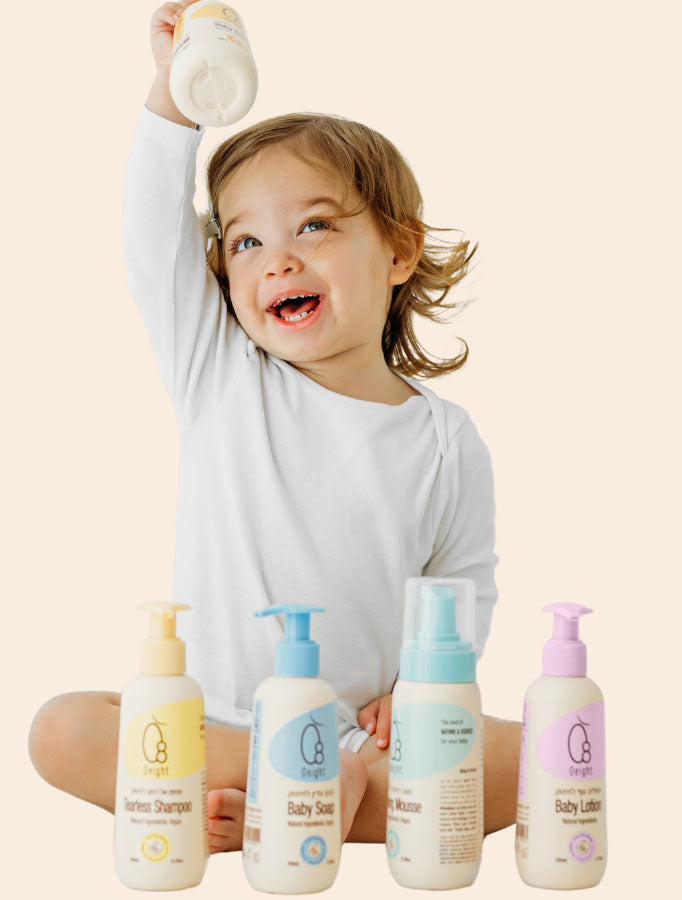
- All-in-one rangeNo cycling through six brands for one baby.
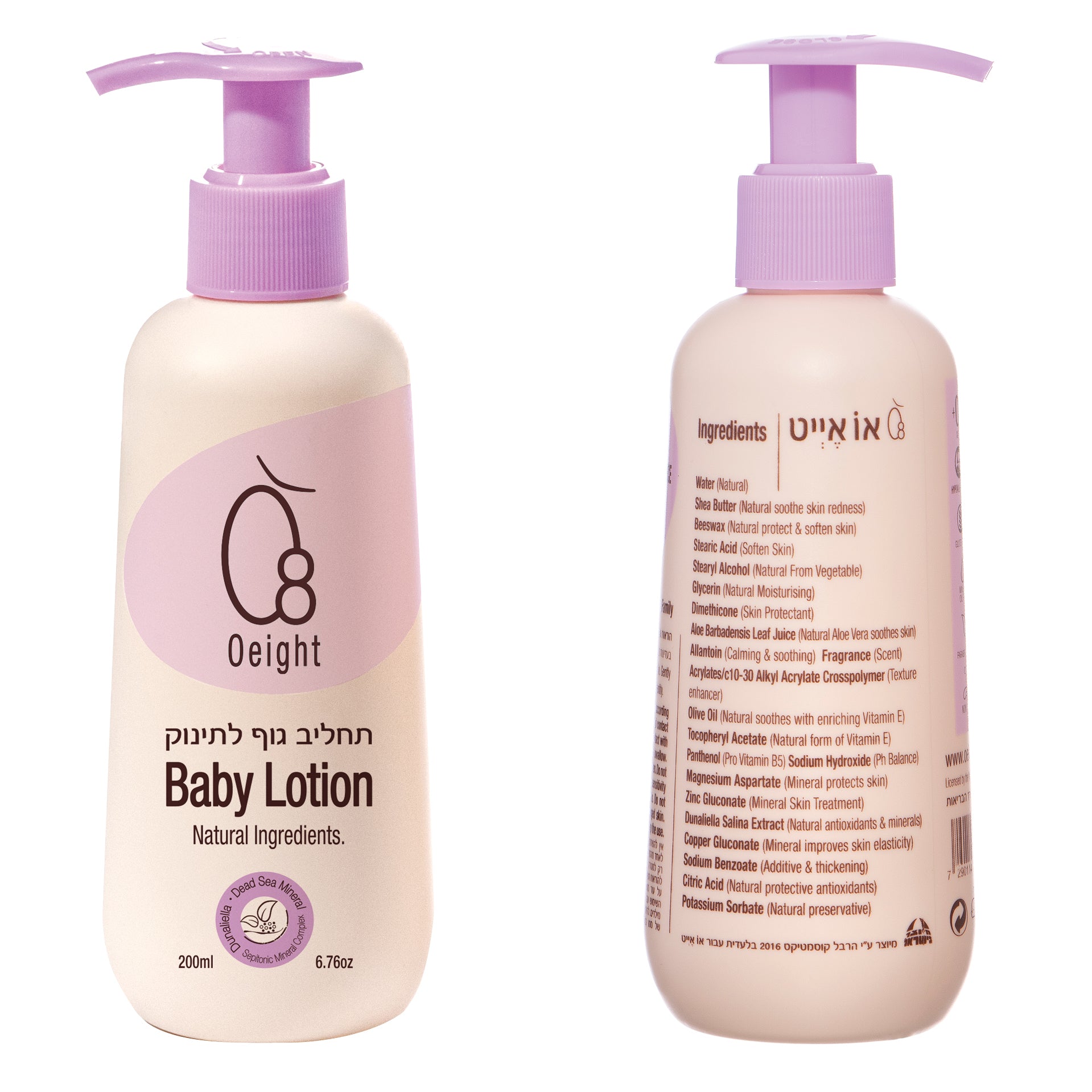
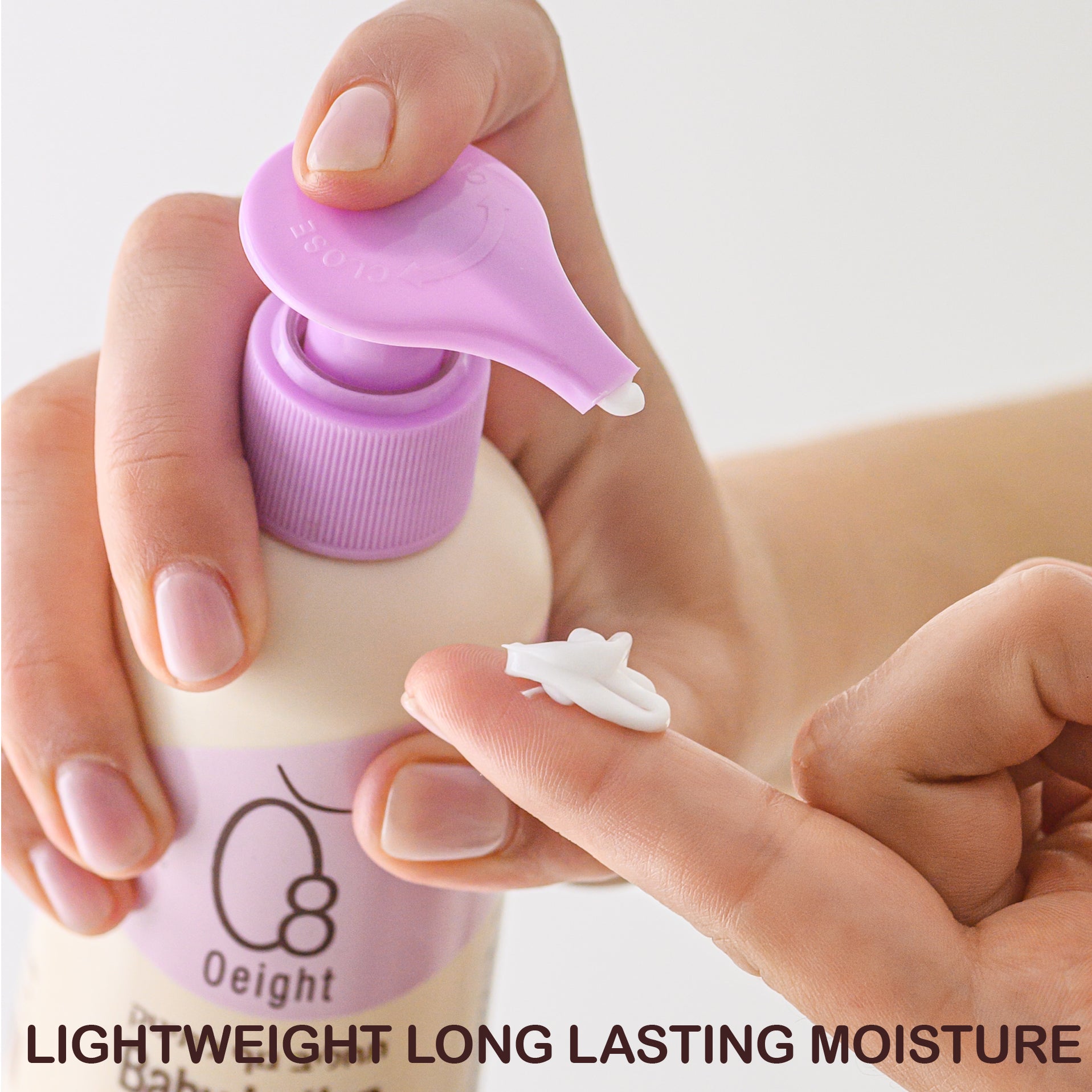
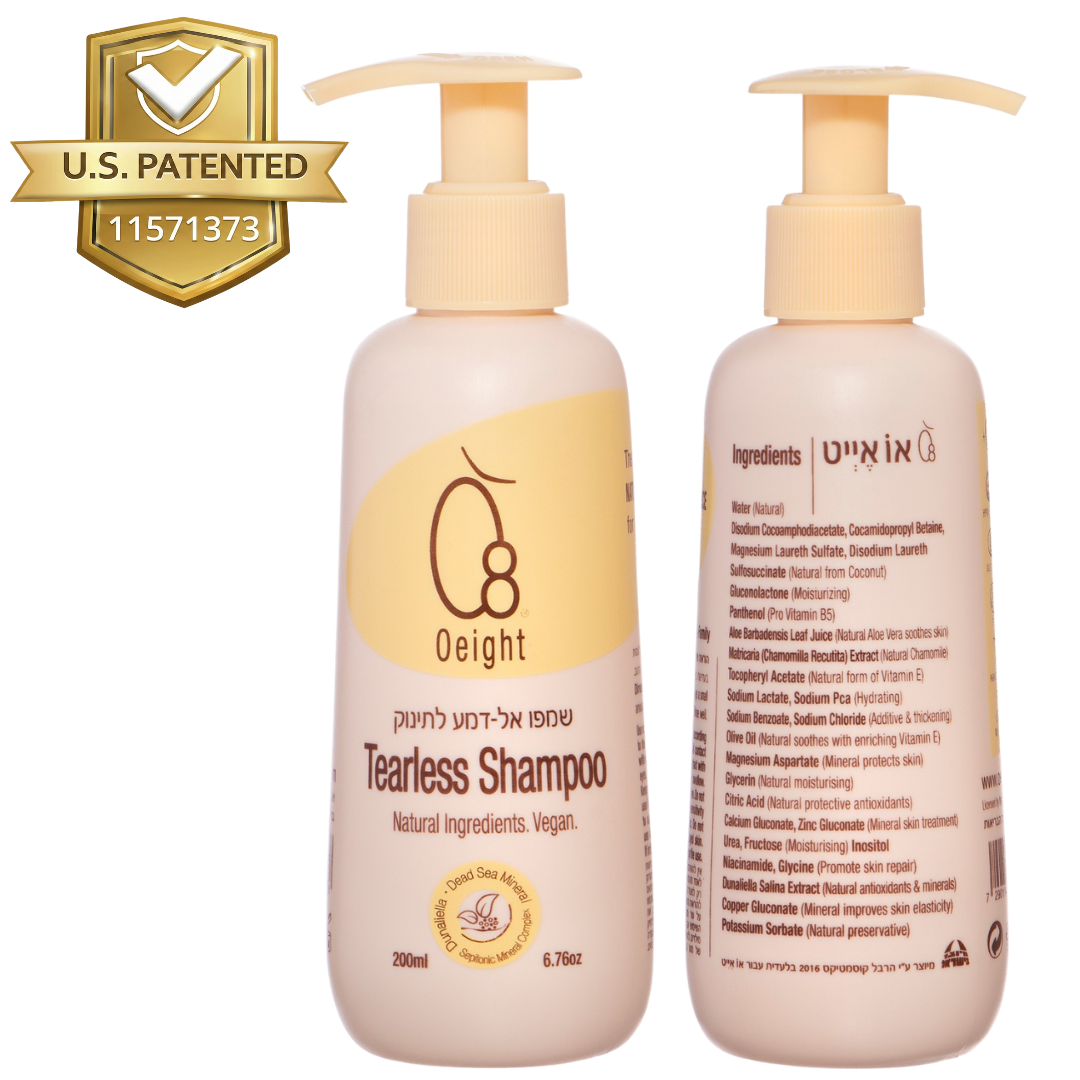
If you are just getting started, skincare for sensitive baby skin is the right entry point. If the primary issue is flaky, tight, generally parched skin rather than active eczema flare-ups, look at products for dry baby skin instead. And the Oeight Baby Lotion is the lighter daily option for the maintenance phase between flares.
Frequently asked questions
What is the best cream for baby eczema on the face?
A thick, fragrance-free cream with barrier-repairing ingredients like ceramides, colloidal oatmeal, or a concentrated botanical complex. For faces specifically, choose a cream over a lotion and over an ointment: creams seal well enough to hold through drool without leaving a greasy film on the cheeks. Reapply after feeds and after outdoor exposure.
Can I put petroleum jelly on my baby's face for eczema?
Yes, and it works well as an overnight seal. Petroleum jelly is the strongest occlusive available and dermatologists recommend it during bad flares. It is not ideal for daytime facial use because it sits on the surface and collects lint, dust, and food. Use a moisturizing cream by day and reserve the ointment for nights.
Is hydrocortisone safe on a baby's cheeks?
Only with pediatrician direction. Facial skin is thin and absorbs topical corticosteroids more readily than skin elsewhere, and infants are more sensitive to steroid effects than adults. 1% hydrocortisone is available over the counter, but the face is not the place to self-prescribe. Ask first, and follow the exact duration you are given.
How often should I moisturize my baby's face if they have eczema?
At minimum twice a day, immediately after the bath and once more. In practice, faces need more: three to five times daily during a flare, and after every meal, since food residue and saliva strip the barrier you just rebuilt. In dry climates, add another application. There is no such thing as over-moisturizing eczema-prone skin.
The short version
There is no single best baby eczema cream, and anyone ranking one at the top without asking about your baby's skin, your climate, and your teething stage is guessing.
What holds up across every case: fragrance-free, thick enough to stay put, applied within three minutes of a lukewarm bath, and reapplied more often than you think is necessary. Pick a formula from the five above, use it consistently for two full weeks before judging it, and see a pediatrician if the face is not improving or if you see yellow crust.
Consistency beats the perfect product. It is not the answer anyone wants, but it is the one that works.