

How to Read a Baby Skincare Label (and the Ingredients to Avoid)
Turn the bottle over before you read the marketing. Here is how to decode the ingredient list, spot hidden irritants, and choose a cleaner formula for newborn skin.
To read a baby skincare label, start with the ingredient list on the back: ingredients are printed in descending order of predominance, so the first few make up most of the product. Scan for red-flag terms like fragrance, parfum, parabens, phthalates, and sulfates, confirm the front-of-pack claims match, and check the expiry date or Period After Opening before you buy.
Baby skincare is one of the few product categories where a label really is worth the two minutes it takes to read. Newborn skin is thinner and more permeable than adult skin, so it absorbs more of what you put on it. This guide breaks down every part of a baby skincare label, explains the ingredient list in plain language, and lists the ingredients to avoid. It reflects labeling rules from the U.S. Food and Drug Administration (FDA) and skin-care guidance from the American Academy of Dermatology and the American Academy of Pediatrics.
Read the ingredient list first (it runs in descending order), scan for fragrance, parabens, phthalates, and sulfates, check that front-of-pack claims match the back, and patch test before full use. Fragrance-free formulas are the safest default for sensitive newborn skin.
How Do You Read a Baby Skincare Label?
Read it in five quick steps. This works for a baby lotion, baby oil, cleanser, or diaper rash cream.
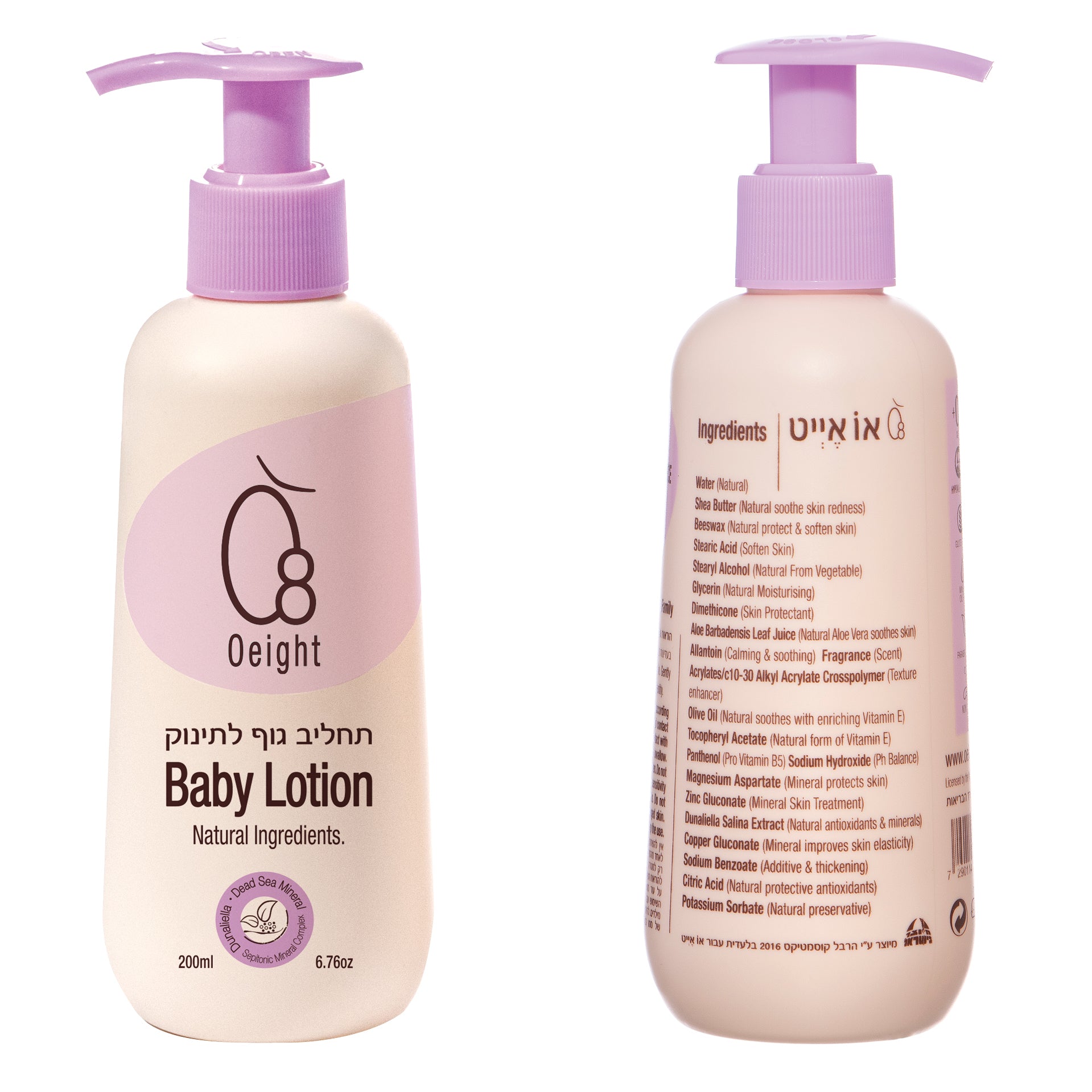
- Read the ingredient list first. It sits on the information panel (usually the back). Ingredients appear in descending order, so whatever is listed first is present in the largest amount.
- Scan for red flags. Look for fragrance, parfum, perfume, parabens, phthalates, and sulfates. These are the terms most likely to irritate sensitive skin.
- Check the front-of-pack claims. Make sure a claim like fragrance-free or hypoallergenic on the front actually matches the ingredient list on the back.
- Confirm the practical details. Net contents, usage and storage directions, an expiry date or Period After Opening symbol, and manufacturer contact details should all be present.
- Patch test before full use. Apply a small amount to your baby's forearm and wait 24 hours, especially for babies with eczema or very sensitive skin.
What US Law Requires on a Baby Skincare Label
Most baby lotions, oils, and washes are regulated as cosmetics, and their labeling is set by the FDA under 21 CFR parts 701 and 740. Knowing what is required helps you tell a complete, trustworthy label from a vague one.
A baby skincare label has two working surfaces: the Principal Display Panel (the front you see on the shelf) and the Information Panel (usually the back or side, where the detail lives).
Front: Principal Display Panel
- Identity statement: what the product is, such as baby lotion or baby oil.
- Net contents: the product weight or volume.
Back: Information Panel
- Ingredient list in descending order.
- Usage and storage directions.
- Warning statements where required (21 CFR 740).
- Manufacturer contact details.
A diaper rash cream or baby sunscreen is regulated as an over-the-counter drug, not a cosmetic. Those carry a "Drug Facts" panel with active ingredients and often use tamper-resistant packaging. A plain moisturizing baby lotion is a cosmetic and will not have a Drug Facts box.
Also check before you buy
- Expiry date and Period After Opening: the open-jar symbol with a number (such as 12M) shows how many months the product stays good after opening.
- Recyclable or eco-friendly packaging: not required, but a signal of how carefully a brand thinks about its product.
| Label element | Where it appears | What to check |
|---|---|---|
| Identity statement | Front (Principal Display Panel) | Clearly names the product type |
| Net contents / product weight | Front | Weight or volume is stated |
| Ingredient list | Back (Information Panel) | Descending order, no vague gaps |
| Usage / storage directions | Back | Clear instructions present |
| Warning statements | Back | Required cautions where applicable |
| Manufacturer contact details | Back | Real company name and address |
| Expiry / Period After Opening | Back or base | Date or open-jar symbol with months |
How to Read the Ingredient List
The ingredient list is written using INCI names, a standardized naming system used on cosmetics worldwide. The INCI list is why aloe shows up as "Aloe Barbadensis Leaf Juice" and water appears as "Aqua."
The golden rule is ingredient order. Ingredients are listed in descending order of predominance, so the first five or six ingredients make up the bulk of the formula. If water and a filler oil top the list and the good actives sit near the bottom, the product may be more marketing than substance.
Watch for the fragrance loophole. Under FDA rules, a brand can list a whole blend of scent chemicals as a single word: fragrance, parfum, or perfume. That one word can hide dozens of undisclosed compounds, which is exactly why fragrance is a common trigger for sensitive skin. To cross-check specific ingredients, the free EWG Skin Deep database rates thousands of cosmetic ingredients.
Baby Skincare Ingredients to Avoid (or Limit)
The short list of ingredients to avoid in baby skincare is fragrance, parabens, phthalates, harsh sulfates, synthetic dyes, and certain antibacterial agents. Here is what each one is and why parents of babies with sensitive or eczema-prone skin tend to skip it.
Synthetic fragrance
The most common cause of skin reactions. Because "fragrance," "parfum," or "perfume" can hide many chemicals, fragrance-free is the safest default. Even natural essential oils are potent and can sensitize delicate skin.
Parabens
A preservative family that stops mold and bacteria, but linked to hormone-disruption concerns. Spot them by the "-paraben" ending, such as methylparaben and propylparaben.
Phthalates
Used to make fragrance last longer and plastics flexible. Rarely listed by name, they often hide inside that single "fragrance" term. Choose phthalate-free where you can.
Sulfates (SLS & SLES)
The foaming detergents sodium lauryl sulfate (SLS) and sodium laureth sulfate (SLES). They clean well but can strip the skin barrier, so sulfate-free is gentler for daily use.
Synthetic dyes
Color that serves no skin-care purpose and can irritate reactive skin. A dye-free product is one less unnecessary ingredient. Spot them as "FD&C" or "D&C" plus a number.
Antibacterial agents
In 2016 the FDA banned 19 antibacterial ingredients (including triclosan) from consumer washes. Three others (benzalkonium chloride, benzethonium chloride, chloroxylenol) remain under review. For babies, plain gentle soap and water is the recommendation.
Petroleum-based ingredients
Mineral oil, petrolatum, and petroleum jelly are considered safe and effective at sealing in moisture, especially for diaper rash. The trade-off is they sit on top of skin rather than nourishing it, so many parents simply prefer plant-based alternatives. This is a preference call, not a safety warning.
Talc in baby powder
The American Academy of Pediatrics recommends avoiding talcum powder for babies because fine particles can be inhaled. If you use a powder at all, a talc-free, cornstarch-based option applied away from the face is safer.
| Ingredient | Often found in | Why parents skip it | Label names to spot |
|---|---|---|---|
| Synthetic fragrance | Lotion, wash, wipes | Top cause of skin reactions | Fragrance, parfum, perfume |
| Parabens | Creams, lotions | Hormone-disruption concerns | Methylparaben, propylparaben |
| Phthalates | Scented products | Hidden, hormone concerns | Often unlisted inside "fragrance" |
| Sulfates | Soaps, bubble bath | Strip the skin barrier | Sodium lauryl sulfate (SLS), SLES |
| Synthetic dyes | Colored products | No benefit, can irritate | FD&C or D&C plus a number |
| Antibacterial agents | Antibacterial soaps | No benefit over plain soap | Benzalkonium chloride, chloroxylenol |
| Talc | Baby powder | Inhalation risk | Talc, talcum |
Label Claims Decoded: Marketing vs Meaning
Front-of-pack claims are helpful, but only a few are tightly defined. Always confirm a claim against the ingredient list.
Fragrance-free vs unscented
Fragrance-free means no fragrance was added. Unscented can still contain a masking fragrance to hide other ingredients, so it is not the same thing.
Hypoallergenic
Suggests a lower chance of reaction, but the FDA does not strictly regulate the term. Treat it as a hint, not a guarantee, and still patch test.
Natural
Largely unregulated for cosmetics, so it can mean almost anything. Read the ingredient list to see how natural a product really is.
Organic & Certified Organic
A USDA Certified Organic seal or NSF organic certification is backed by an independent standard, carrying far more weight than a loose "organic" on the front.
Free-from claims
Paraben-free, sulfate-free, and phthalate-free are useful shortcuts, but a product can be free of one bad ingredient and still contain others.
The final word
Whatever the front says, the full ingredient list on the back is what actually goes on your baby's skin. Read it last and trust it most.
Green Flags: Ingredients That Help
A good baby skincare label is short, readable, and built around gentle, recognizable ingredients. Some entries are functional (they hold the formula together) and some are active (they care for the skin).
Functional ingredients (normal and necessary)
Not every unfamiliar word is bad. A humectant like glycerin draws in water, an emulsifier blends oil and water, a thickener sets the texture, a gentle preservative keeps the product safe from bacteria, a pH adjuster or pH stabilizer keeps it skin-friendly, a chelating agent protects the formula, and a skin conditioner improves feel. These roles are normal in any well-made product.
Shea & cocoa butter
Rich emollients that strengthen the skin barrier.
Aloe vera & chamomile
Soothing botanicals that calm redness.
Calendula
A plant extract long used to comfort irritated, diaper-rash-prone skin.
Plant oils
Almond, jojoba, avocado, and coconut oil nourish and soften.
Vitamin E
An antioxidant that supports and protects the skin.
Glycerin
A gentle humectant that draws and holds water in the skin.
Reading Labels by Product Type
Each baby product has its own label tells.
Baby lotion
A cosmetic. Water is usually first, followed by emollients and humectants. Shorter is better.
Baby oil
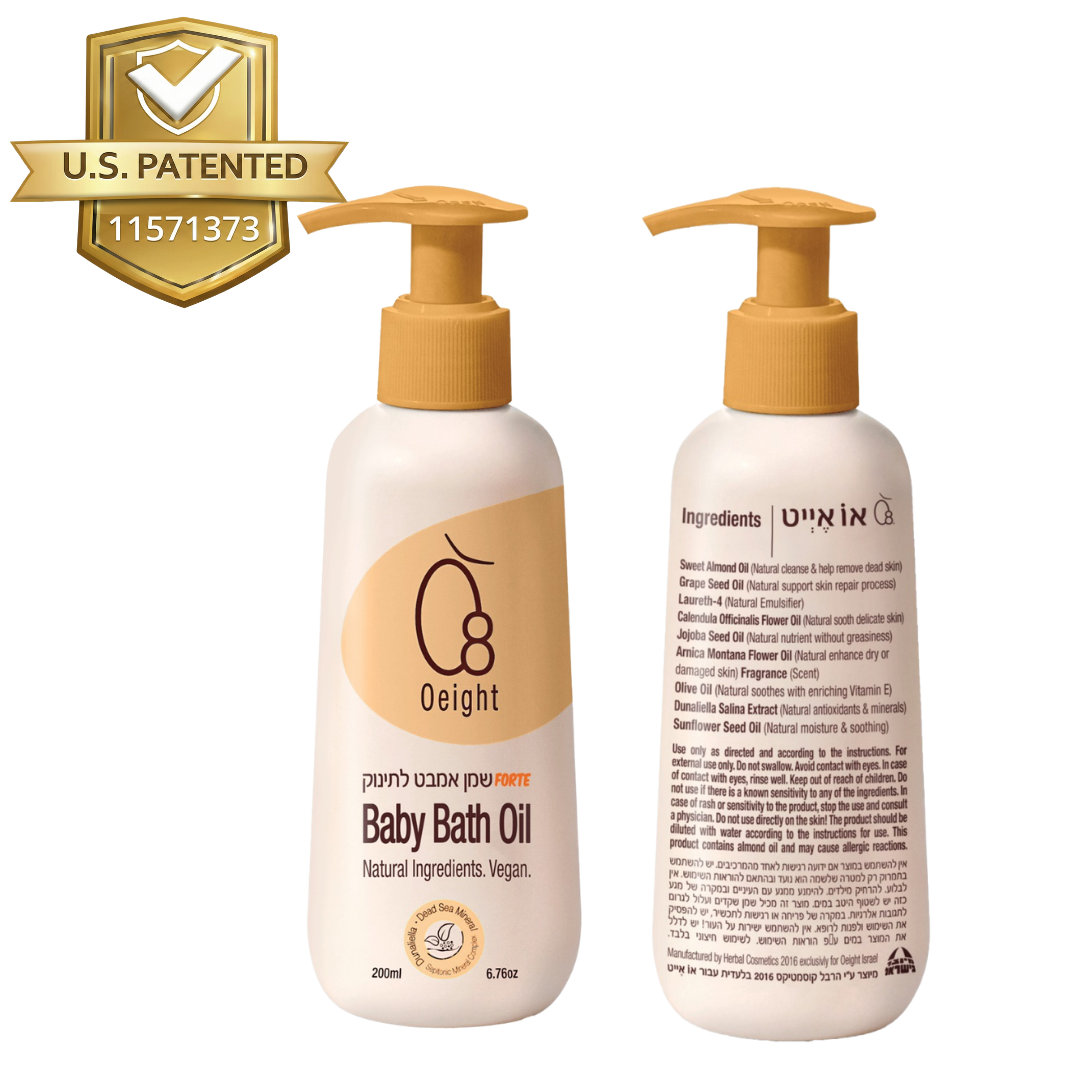
Should be a clean single oil or plant-oil blend. Check whether the base is mineral oil or a natural oil like jojoba or almond.
Baby powder
Choose talc-free, and remember the AAP advises caution with any powder near a baby's face.
Diaper rash cream
An over-the-counter drug with a Drug Facts panel. The active is often zinc oxide.
Baby laundry detergent
Not on the skin directly, but residue is. Fragrance-free and dye-free options reduce hidden irritants.
Go deeper
See our guides on why babies get dry skin and the complete parent's guide to baby eczema.
Safety Considerations for American Parents
- Patch test everything new. Apply a small amount to the forearm and wait 24 hours before regular use.
- Fewer ingredients, fewer problems. On newborn skin, a short ingredient list beats a long one, especially for eczema and diaper rash.
- When in doubt, ask. A pediatrician can advise on any product for a baby with a diagnosed skin condition, and "pediatrician recommended" on a label is a useful, though not regulated, signal.
- Labels are about to get more transparent. Under the Modernization of Cosmetics Regulation Act (MoCRA), the FDA is developing a rule that will require specific fragrance allergens to be named on cosmetic labels, making hidden fragrance chemicals easier to spot.
Why Parents Choose Oeight for a Cleaner Label
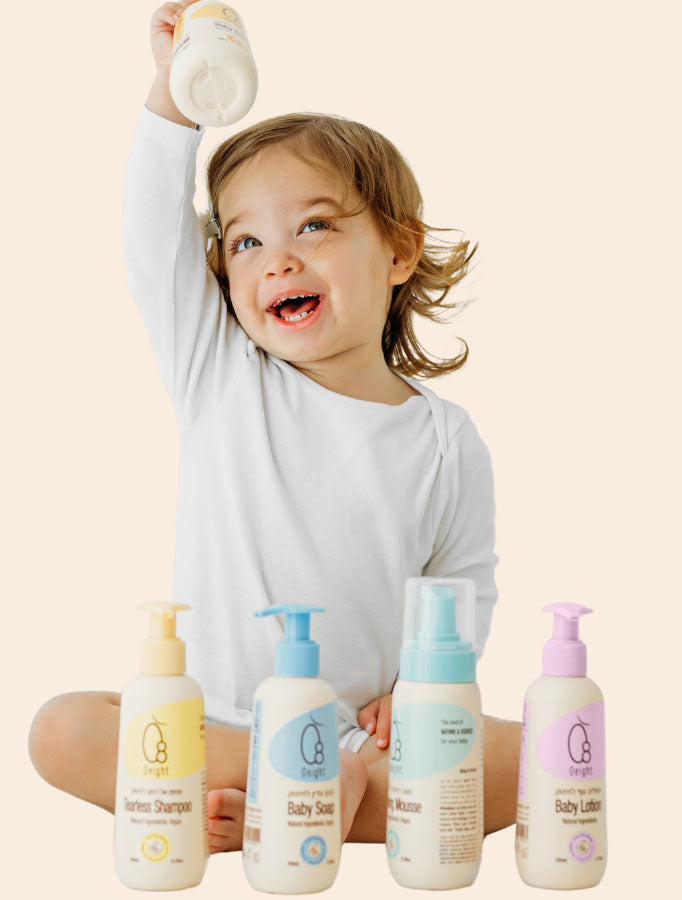
For parents who want a label they can actually read, Oeight is worth a look. The line was developed over a decade alongside dermatologists, allergists, and chemists specifically for delicate newborn and sensitive skin.
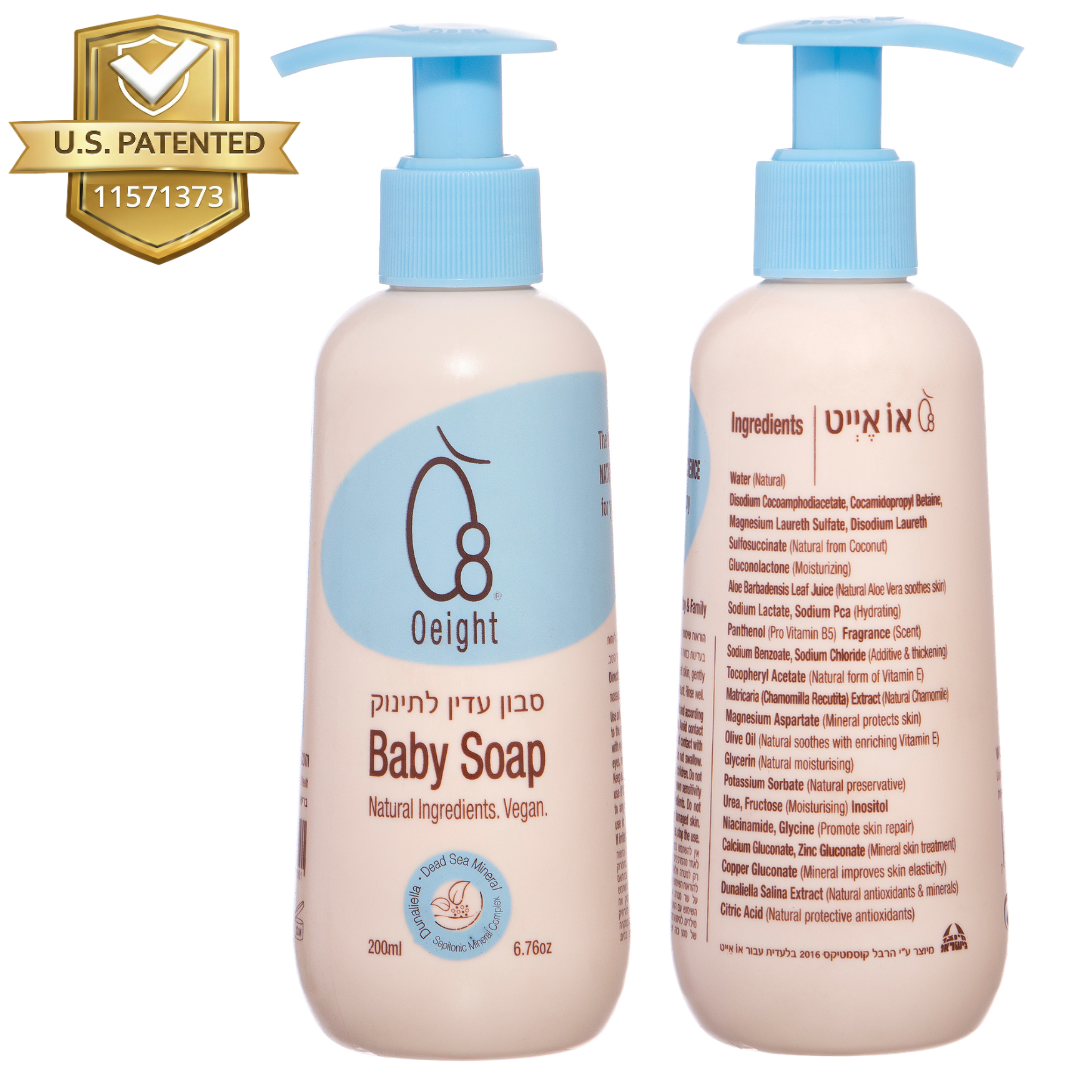
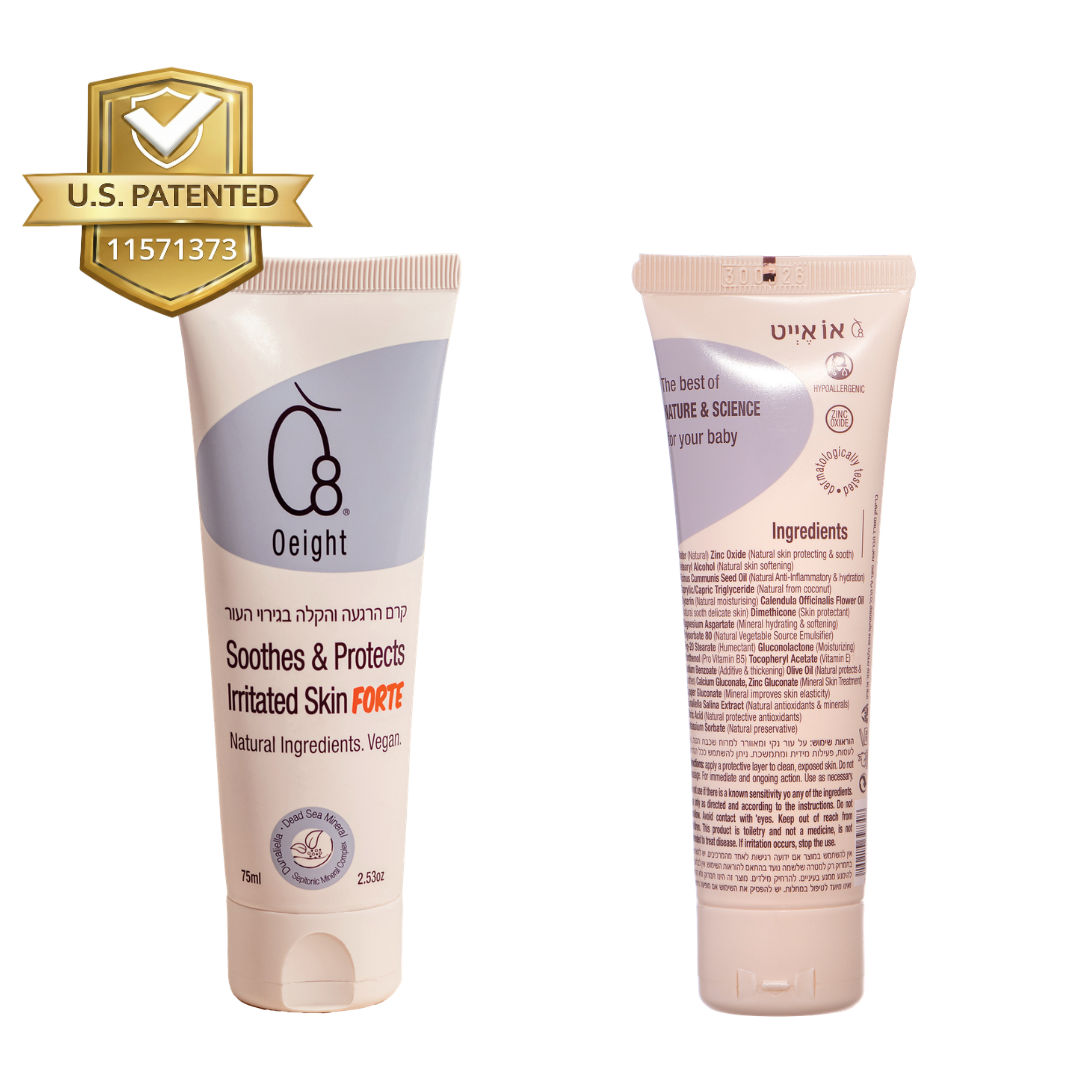
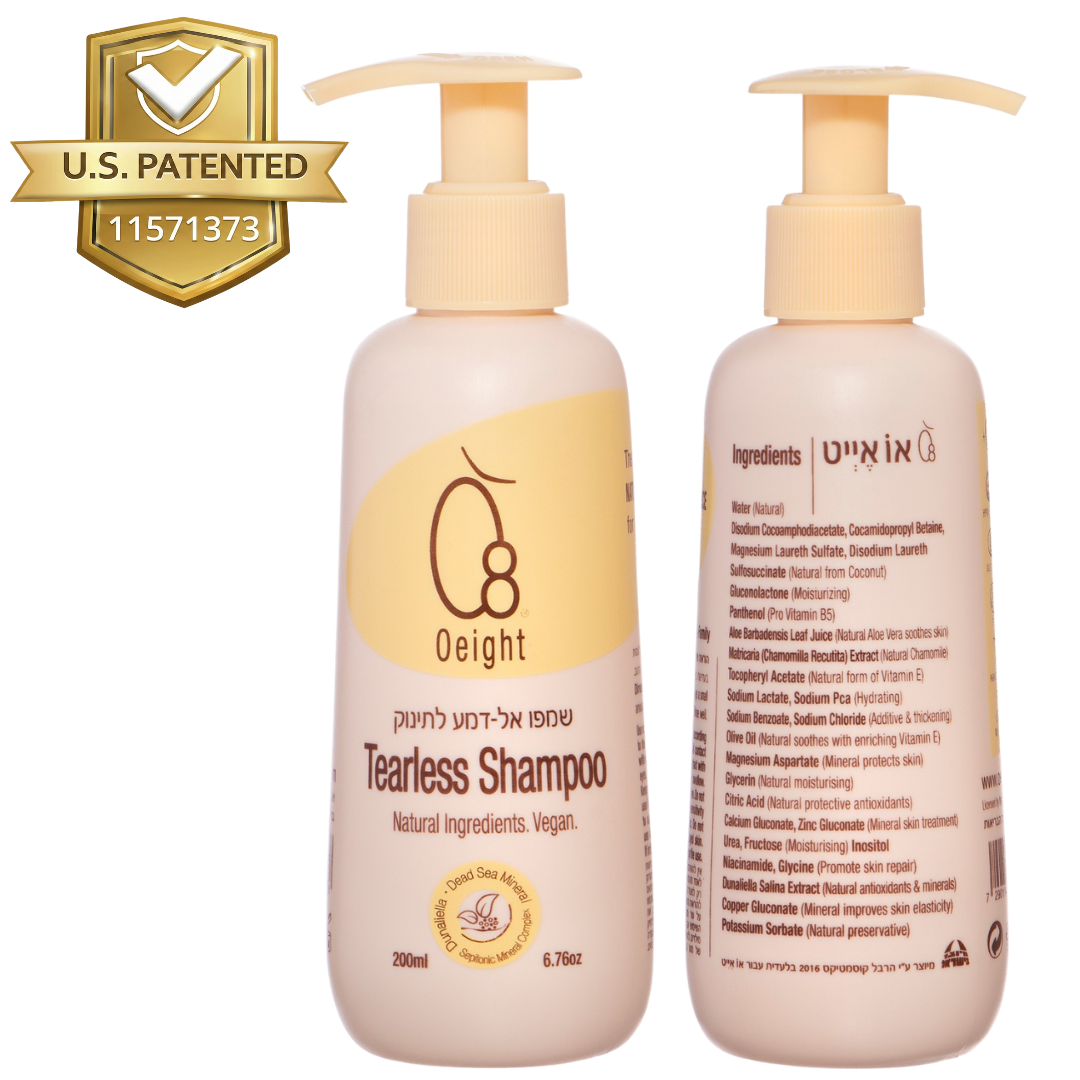
- A US-patented natural formula built around Dunaliella Salina, a Dead Sea microalgae rich in beta-carotene (US Patent No. 11571373).
- Zero synthetic fragrances, with no parabens and no sulfates, a strong fit for hypoallergenic, sensitive skin.
- Highly concentrated, All-in-One care, so a short ingredient list does more with less on the skin.
- Smart, architect-designed packaging, created by a founder who is an architect and father of four.
Frequently Asked Questions
How do you read a baby skincare label?
What ingredients should I avoid in baby skincare?
What does fragrance-free actually mean on a baby product?
Is petrolatum or mineral oil safe for babies?
The Bottom Line
Reading a baby skincare label comes down to one habit: turn the product over and read the ingredient list before you read the marketing. Ingredients are listed in descending order, so the top of the list tells you what you are really buying.
Skip synthetic fragrance, parabens, phthalates, harsh sulfates, and synthetic dyes, treat claims like natural and hypoallergenic as hints rather than proof, and lean toward short lists built on gentle, recognizable ingredients. When a product carries a diagnosed skin condition claim or you are unsure, check with your pediatrician.
Sources
- U.S. Food and Drug Administration: Cosmetics Labeling Regulations (21 CFR 701 and 740)
- U.S. Food and Drug Administration: Skip the Antibacterial Soap; Use Plain Soap and Water
- U.S. Food and Drug Administration: Modernization of Cosmetics Regulation Act of 2022 (MoCRA)
- American Academy of Dermatology: Skin Care for Babies
- American Academy of Pediatrics, HealthyChildren.org: Baby Bathing & Skin Care
- Environmental Working Group: Skin Deep Cosmetics Database
Key Takeaways
- Read the ingredient list first. It is printed in descending order, so the first few ingredients make up most of the product.
- Know the label parts. The front carries the identity statement and net contents; the back carries the ingredient list, warnings, directions, and manufacturer contact details, set by the FDA under 21 CFR parts 701 and 740.
- Avoid the usual suspects: fragrance (parfum), parabens, phthalates, sulfates (SLS and SLES), synthetic dyes, and antibacterial agents.
- Claims are hints, not proof. Fragrance-free beats unscented, and a USDA Certified Organic or NSF seal beats a loose "natural" claim. Cross-check against the ingredient list.
- Green flags are short lists built on shea butter, aloe vera, chamomile, calendula, and gentle plant oils, plus normal functional ingredients like humectants and preservatives.
- Patch test and ask. Test any new product for 24 hours, and check with your pediatrician for a baby with eczema or a diagnosed skin condition.