

How to Tell Baby Eczema from Heat Rash, Drool Rash & Other Common Rashes: A Parent's Guide
A doctor-informed, parent-friendly guide on How to Tell Baby Eczema from Heat Rash and the other most common skin rash conditions on American babies - what they look like, where they appear, and what to do next.

Quick Answer for Busy Parents
A baby with red bumps after a nap, a warm stroller walk, or a bath can leave parents guessing fast. The fastest way to distinguish baby eczema from heat rash is to compare location, texture, triggers, and whether the skin looks dry or sweaty.
- Baby eczema (atopic dermatitis / infantile atopic dermatitis) is dry, itchy, and usually shows up on the cheeks, scalp, and outer arms - and it keeps coming back.
- Heat rash (miliaria / prickly heat / sweat rash) is tiny red bumps in covered, sweaty areas - neck folds, chest, back, armpits, diaper area - caused by blocked sweat glands and blocked sweat ducts.
- Drool rash is shiny red patches right around the mouth, chin, and neck folds during teething.
- Diaper rash stays inside the diaper area and can be irritant, yeast, bacterial, or allergic.
- Hives (urticaria), roseola, fifth disease, hand, foot, and mouth disease, measles, chickenpox, impetigo, ringworm, baby acne, milia, and cradle cap (seborrheic dermatitis) are all different - and a few are contagious. We cover them all below.
When in doubt, the location of the skin rash and how long it lasts are the two fastest clues. Eczema is chronic; heat rash, drool rash, and most diaper rashes are short-term and triggered by something specific; viral rashes (viral exanthem) typically come with fever or other systemic symptoms.
Why Correctly Identifying Your Baby's Skin Rash Matters
The wrong cream on the wrong rash can make things worse. Topical corticosteroids used on a yeast infection can feed the fungus. A heavy occlusive ointment on heat rash traps even more sweat. Antibiotic ointment does nothing for a viral skin rash.
Pediatric dermatology specialists report that baby skin is thinner and more reactive than adult skin, and most rashes in the first year are mistaken at least once by parents - and sometimes by clinicians too. According to HealthyChildren.org from the American Academy of Pediatrics, up to 1 in 4 children develop eczema, and most cases start before age 1.
The good news: you don't need a medical degree to make a confident first guess. You need a clear comparison framework, and the discipline to know when a rash is beyond home care and needs a pediatrician.
The Fastest Way to Distinguish Baby Eczema from Heat Rash
Parents usually separate eczema from heat rash by asking four practical questions:
- Is the skin dry or sweaty? Eczema looks and feels dry (xerosis); heat rash sits on sweaty skin.
- Are the spots patchy or pinpoint? Eczema forms broader uneven red patches; miliaria forms uniform pinprick red bumps.
- Did heat trigger it? Overheating, overdressing, and warm humid weather point to miliaria.
- Does cooling help quickly? A rash that fades within hours of moving to a cooler room is far more likely to be heat rash than atopic dermatitis.
That framework works because the two conditions have completely different mechanisms. Eczema reflects chronic barrier dysfunction and inflammation in the skin barrier. Heat rash reflects blocked sweat ducts trapping sweat under the skin.
| Clue | Baby eczema | Heat rash (miliaria) |
|---|---|---|
| Triggered by | Dry air, irritant triggers, allergen triggers | Overheating, humidity, hot weather, fever |
| Skin feel | Dry, scaly, rough - xerosis (dry skin) | Moist, sweaty |
| Lesion shape | Uneven red patches, scaling | Uniform pinprick papules and red bumps |
| Itch | Persistent pruritus (itch), worst at night | Prickly or stinging when hot |
| Speed of recovery | Days to weeks with skin barrier care | Hours to a couple of days once cooled |
| Location | Cheeks, scalp, outer arms, flexural eczema in skin folds | Neck folds, upper back, armpits, diaper area, under hats |
One practical rule is highly reliable: a rash that improves quickly once the skin is cooled is more likely miliaria than eczema. A rash that stays rough and dry even in a cool room deserves closer evaluation for atopic dermatitis or another inflammatory condition.
The Most Common Baby Rashes in America (At-a-Glance Comparison)
| Rash | Where It Appears | What It Looks Like | Itchy? | How Long It Lasts |
|---|---|---|---|---|
| Eczema (atopic dermatitis) | Cheeks, forehead, scalp, outer arms, elbow/knee creases | Dry red patches, scaling, sometimes weepy | Very (pruritus) | Chronic - flares come and go |
| Heat rash (miliaria rubra / prickly heat) | Neck folds, chest, back, armpits, under clothing | Tiny red bumps, sometimes papules or vesicles | Sometimes | A few days once cooled |
| Drool rash | Mouth, chin, cheeks, neck folds | Shiny erythema, slightly bumpy patches | Mild | Resolves with teething/drying |
| Diaper rash (irritant) | Buttocks, thighs, groin | Flat red erythema, sometimes shiny | Uncomfortable | 3–4 days with care |
| Yeast diaper rash | Skin folds inside diaper area | Bright erythema with defined edges, satellite red bumps | Mild to moderate | Needs antifungal cream |
| Cradle cap (seborrheic dermatitis) | Scalp, eyebrows, behind ears | Yellow greasy scaling | Not usually | Weeks to months, harmless |
| Hives (urticaria) | Anywhere, often shifts position | Raised pink/red welts, blanch when pressed | Very | Minutes to hours, sometimes days |
| Roseola (HHV-6) | Trunk first, then arms/neck after fever | Pink flat patches and small red bumps | No | 1–3 days after fever breaks |
| Fifth disease (parvovirus B19) | Cheeks (slapped-cheek), then arms/legs | Bright red cheeks, lacy body rash | Mild | 1–3 weeks (rash phase) |
| Hand, foot, and mouth disease | Palms, soles, around mouth, sometimes diaper area | Red spots and vesicles | Mild to moderate | 7–10 days |
| Chickenpox (Varicella-Zoster virus) | Whole body, in waves | Itchy red bumps that blister and scab | Very | 5–10 days |
| Impetigo | Around nose, mouth, anywhere with broken skin | Honey-colored crust on red base | Mild | Needs antibiotics |
| Ringworm / athlete's foot | Anywhere - scalp, body, feet | Round red ring with clearer center | Yes | Needs antifungal cream |
| Measles | Starts at hairline, spreads down body | Flat red patches that merge | No, but with fever/cough | 5–7 days |
| Poison ivy / contact dermatitis | Wherever skin touched the plant or allergen | Streaky red patches, blisters | Very | 1–3 weeks |
| Milia | Tiny white bumps on nose, chin | Pinhead white papules | No | Resolves on own in weeks |
| Baby acne | Cheeks, nose, forehead | Small red and white papules | No | First weeks of life, self-resolves |

1. What Baby Eczema Looks Like in Real Life
Eczema is the skin rash that doesn't quit. Infantile atopic dermatitis often starts as red patches with dry skin on the cheeks and scalp, then may spread to the trunk, arms, or legs. The defining feature is barrier dysfunction - the skin loses moisture easily and reacts strongly to everyday irritants.
What's actually happening in the skin
Babies with eczema have less of a protein called filaggrin, which helps the skin barrier hold in water and keep out allergens, bacteria, and irritants. That broken barrier raises transepidermal water loss (TEWL), causes inflammation, and powers the itch-scratch cycle that defines the condition.
Parents often notice rubbing before they notice scratching. Babies may drag their face on sheets, rub against a caregiver's shoulder, or become restless during sleep because pruritus (itch) is persistent in eczema even when the room is cool.
Common eczema patterns in infants
In infants under 1 year, the American Academy of Dermatology and Nemours KidsHealth both note eczema usually starts on the cheeks, forehead, or scalp. Later it may spread to the trunk, elbows, and knees, often forming flexural eczema in skin folds. Eczema rarely appears in the diaper area - that's a useful elimination clue.
The rash usually looks uneven rather than dotted. Instead of many tiny identical bumps, eczema forms broader inflamed areas with scaling, roughness, and sometimes small cracks or oozing if the skin has been scratched. Over time, repeated scratching can cause lichenification - skin that becomes thickened and leathery from chronic rubbing.
Eczema also behaves like a repeating condition, not a one-time event. That recurring pattern matters because genetics, allergens, and irritants such as harsh soaps, fragranced detergent, and added perfumes can keep reactivating inflammation long after a single hot day has passed.

What baby eczema looks like - the key signs
- Dry red patches with scaling and visible skin redness
- Skin feels rough or sandpaper-like
- Cracks or oozing in scratched areas, sometimes leading to secondary infection
- On darker skin tones, the rash may look brown, purple, or gray rather than red
- Often more visible after baths or in dry winter air
How long it lasts
Eczema is chronic by definition. It flares, calms down, and flares again. Around half of children with infantile atopic dermatitis see major improvement by age 3, but the underlying sensitivity stays in many.
Triggers that often worsen eczema flare-ups
Several common exposures can provoke eczema flares:
- Dry air and overheating that weaken the skin barrier
- Irritant triggers - harsh soaps, fragranced detergent, added perfumes, baby wipes containing alcohol
- Allergen triggers - dust mites, pet dander, pollen
- Friction from non-breathable fabrics, wool, or tight clothing
- Saliva, drool, and food residue around the mouth
- Stress, illness, teething
- Family history and genetics, which strongly shape eczema risk
- Food allergy in a subset of children, though this requires medical evaluation
Stress can also intensify eczema, even in very young children, because skin inflammation and the nervous system influence each other. Stress doesn't cause eczema, but it can make existing eczema symptoms harder to calm.
How eczema is treated
- A fragrance-free moisturizer (an emollient) applied to slightly damp skin after bathing - this is the single most important step
- Lukewarm oatmeal bath (10–15 minutes) can calm a flare-up; colloidal oatmeal is on the National Eczema Association accepted ingredient list
- Low-strength topical corticosteroids (corticosteroid creams) prescribed by a pediatrician or pediatric dermatologist for moderate flares
- Topical calcineurin inhibitors (such as tacrolimus or pimecrolimus) for sensitive areas like the face, on specialist guidance
- Wet wrap therapy for severe flares, under clinical direction
- Oral antihistamines at bedtime if itching interferes with sleep (only on medical advice for infants)
- Avoiding identified triggers - switching detergents, using a humidifier, choosing cotton clothing
If you're already navigating eczema, a deeper read sits in Oeight's article on gentle ways to soothe baby eczema naturally.
2. What Heat Rash Looks Like and Why It Happens
Heat rash means sweat couldn't escape. Miliaria develops when sweat glands cannot release sweat normally. That blockage in the sweat ducts causes sweat to collect under the skin, producing miliaria in several forms that differ by depth and appearance.
The four types of miliaria
- Miliaria crystallina - tiny, clear, fluid-filled vesicles that pop easily. Most common in newborns under two weeks. Not itchy.
- Miliaria rubra (prickly heat) - small red papules and inflamed red bumps that itch or sting. The most common type in babies 1–3 weeks old, per Mayo Clinic.
- Miliaria profunda - deeper flesh-colored bumps from sweat trapped at a lower skin layer. Less common.
- Miliaria pustulosa - inflamed bumps that fill with pus when inflammation intensifies. May need a pediatrician visit.
Where heat rash appears
According to HealthyChildren.org, heat rash favors hot, occluded areas - the neck folds, upper chest, back, armpits, the diaper line, under hats, and behind the knees. That is why infants often develop a sweat rash anywhere overdressing or tight clothing reduces airflow. If the rash is in places clothing covers and skips the face, suspect heat rash first.

Signs that point toward miliaria instead of eczema
Heat rash symptoms usually have a clear environmental story. A baby may have been swaddled heavily, sleeping in a warm room, febrile, or dressed in non-breathable fabrics before the rash appeared.
The bumps also tend to be more uniform than eczema lesions. When many tiny similar spots appear at once on sweaty skin, blocked sweat glands are a stronger explanation than atopic dermatitis.
Another useful clue is speed of improvement. With cooling, lighter clothing, and less humidity, mild baby heat rash often settles within hours to a couple of days, while eczema rarely resolves that fast without ongoing skin barrier care.
Heat rash treatment
Fastest fix: cool the baby down. Heat rash treatment is more about environment than medication.
- Remove extra layers and avoid overdressing
- Switch to cotton clothing and lightweight bedding instead of tight clothing or heavy synthetic fabrics
- Keep the room at a comfortable room temperature and reduce humidity
- Give a brief lukewarm bath or cool compress (a cold compress works equally well) and pat skin dry
- Avoid occlusive ointments on sweaty areas - they trap heat and worsen miliaria
- Skip highly concentrated skincare during a flare; simpler is better
- Offer hydration through normal feeding
Calamine lotion is sometimes used for older children, but parents should ask a pediatrician before applying any medicated product to an infant's widespread rash. The safest first move for baby heat rash is usually cooling and airflow, not layering on creams.
3. Drool Rash: The Teething Companion
Drool rash is a form of contact dermatitis caused by saliva. Saliva contains digestive enzymes that, when sitting on delicate skin for hours, cause barrier dysfunction and the kind of skin irritation parents see during teething.
Where drool rash appears
Around the mouth, chin, cheeks, neck folds, and upper chest - anywhere saliva pools or drips. If the skin irritation rash is in a clean line where a bib doesn't cover, that's drool's path.
What drool rash looks like
- Shiny, raw-looking erythema
- Slightly raised, sometimes bumpy
- Skin may feel chapped
- Often shows up between 3 and 6 months when teething starts
How to tell drool rash from eczema
This is the trickiest pair to distinguish - they both love a baby's cheeks. The Bump's pediatrician-reviewed guide offers a useful rule: a rash only around the mouth that appears with teething is almost always drool. A rash that also shows up on the scalp, behind the ears, or in elbow creases is more likely atopic dermatitis.
| Clue | Drool rash | Eczema |
|---|---|---|
| Location | Mouth, chin, neck | Cheeks and elsewhere |
| Texture | Shiny, raw | Dry, scaly |
| Itchy? | Mild discomfort | Intensely itchy (pruritus) |
| Pattern | Constant when teething | Flares and recedes |
| Onset | 3–6 months | Often earlier, often genetic |
Care for drool rash
- Gently pat (don't wipe) saliva away throughout the day
- Avoid alcohol- or fragrance-laden baby wipes near the mouth - they make the irritation worse
- Use a soft, absorbent bib and change it when damp
- Wash the area with a gentle cleanser that is fragrance-free and SLS-free
- Apply a thin barrier - petroleum jelly or a hypoallergenic natural balm - before naps and bedtime

4. Diaper Rash: There Are Actually Four Kinds
Diaper rash is the most common skin rash of infancy. According to the Cleveland Clinic, more than half of babies between 4 and 15 months experience it at least once in a two-month window. Knowing which type changes the treatment completely.
Irritant diaper rash (the most common)
Flat, red, sore-looking patches on the skin that directly touches the diaper - buttocks, thighs, genitals. Caused by moisture, urine, stool, and friction. Treats with frequent diaper changes, air time, and a zinc-oxide-based barrier cream.
Yeast (Candida) diaper rash
HealthyChildren.org describes yeast rash as bright erythema with defined edges, often in skin folds, with smaller red satellite spots scattered nearby. It often follows a course of antibiotics. Standard diaper creams won't clear it - it needs a topical antifungal, usually prescribed by a pediatrician.
Bacterial diaper rash (impetigo or skin colonization by staph/strep)
Yellow honey-colored crust on a red base, sometimes oozing, occasionally with pimple-like bumps. Caused by bacterial skin colonization that escalates to a skin infection. Untreated, it can deepen into cellulitis. Less common but needs a doctor visit and usually a topical antibiotic.
Allergic contact diaper rash
Reaction to a wipe, diaper, detergent, or cream ingredient. Often looks like irritant rash but tracks exactly where the suspect product or allergens touched the skin. Eliminating the trigger and switching to fragrance-free baby wipes and a natural skincare line for sensitive baby skin usually resolves it.
Diaper rash vs. eczema in the diaper area
Eczema typically avoids the diaper area because moisture there is actually protective for an eczema baby. If a skin rash is only in the diaper area, it is almost certainly diaper rash, not eczema. For more on choosing the right cream, see Oeight's diaper rash guide by Dr. O. Gefen.
5. Non-Infectious Rashes American Parents Often Confuse with Eczema
Not every infant rash is eczema or heat rash. Several other common conditions can look similar enough to cause confusion.
Cradle cap (seborrheic dermatitis)
Yellow, greasy, scaly patches on the scalp, eyebrows, or behind the ears. Looks alarming, but it's harmless and usually resolves on its own. Not itchy, which is a key difference from atopic dermatitis. Gentle loosening with a soft brush and a tear-free natural baby shampoo over a few weeks usually clears it. Seborrheic dermatitis causes greasy yellowish scale, while eczema causes dry inflammation - that's the cleanest distinction.
Baby acne (neonatal acne)
Small red and white papules, often on the cheeks, nose, and forehead, appearing in the first weeks of life. Caused by maternal hormones, not skin irritation. Unlike heat rash, baby acne usually centers on the face rather than sweaty folds under clothing. Resolves on its own - no creams needed.
Milia
Tiny pinhead-sized white bumps, usually on a newborn's nose and chin. Painless, not itchy, harmless. Caused by trapped keratin in pores; they clear on their own within weeks.
Erythema toxicum (newborn rash)
Splotchy red patches with small yellow or white pustules in the center, appearing in the first few days of life. Looks dramatic, lasts about a week, completely benign. Almost half of all healthy full-term newborns get it.
Hives (urticaria)
Raised pinkish-red welts that shift position within minutes to hours - they may appear on the arm, fade, and pop up on the leg. Hives are an allergic reaction, often to food, medication, insect bites, or environmental allergens. Press gently on a hive and it usually blanches white.
For mild cases: a cool compress, oral antihistamines (only on pediatrician advice for infants under 1), and loose cotton clothing to reduce friction. Hives with swelling of the face, lips, or tongue, or any breathing difficulty, is a medical emergency - seek care immediately.
Contact dermatitis (including poison ivy)
A skin irritation rash that appears in the exact shape of whatever caused it. The sharp border of the reaction often gives it away, especially after exposure to wipes, laundry detergents, fragrances, or certain fabrics. Poison ivy is the most famous example: streaky red patches, often with small vesicles, where the leaf brushed the skin.
For poison ivy or other plant-based contact dermatitis:
- Wash the skin thoroughly with cool water and a gentle cleanser
- Apply calamine lotion to soothe itching
- A cool compress several times a day
- Oral antihistamines only with pediatrician approval
Impetigo (bacterial skin infection)
Highly contagious. Honey-colored crust on a red base, usually around the nose, mouth, or any spot where the skin barrier is broken. Caused by staph or strep bacteria and skin colonization that escalates into a skin infection. Needs prescription topical or oral antibiotics. Untreated impetigo can occasionally deepen into cellulitis. Do not treat with home remedies alone - early antibiotics prevent spread to other children.
Ringworm (tinea) and athlete's foot
Despite the name, ringworm is a fungal infection, not a worm. Look for a red ring-shaped patch with a clearer center, slowly expanding outward. When it appears on a baby's foot, it's called athlete's foot (tinea pedis). Treated with an over-the-counter or prescription antifungal cream. Highly contagious - wash all clothing and bedding in hot water.
Less common eczema subtypes (mostly older children)
Parents may encounter these names in research. Nummular eczema forms coin-shaped patches, dyshidrotic eczema affects hands and feet with small vesicles, and stasis dermatitis is related to circulation problems rather than infant skin disease.
6. Viral & Infectious Rashes Every Parent Should Recognize
A viral exanthem is typically accompanied by fever or other systemic symptoms, which is the fastest way to tell these rashes apart from eczema, heat rash, or diaper rash. None of them are caused by skincare products - though gentle, fragrance-free care helps the skin recover.
Roseola (caused by human herpesvirus 6)
Roseola is one of the most distinctive baby illnesses. The pattern is unmistakable:
- A baby (usually 6–24 months) develops a high fever for 3–5 days, sometimes without any other symptom
- As the fever breaks, small pink flat patches and red bumps appear, starting on the trunk and spreading outward
- The skin rash is not itchy, fades within 1–3 days, and the baby is no longer contagious
Roseola is caused by human herpesvirus 6 (HHV-6), sometimes HHV-7. There is no specific treatment - fever can be managed with acetaminophen on pediatrician guidance, and plenty of fluids. The rash itself needs no cream.
Fifth disease (parvovirus B19)
Also called "slapped cheek syndrome" because of its hallmark sign: bright red cheeks that look like the baby has been slapped. A few days later, a lacy pink rash spreads to the arms, legs, and trunk. Caused by parvovirus B19.
Fifth disease is usually mild in babies and resolves on its own within 1–3 weeks. The skin rash may come and go for several weeks, especially with sun exposure or warm baths. Tylenol-equivalent acetaminophen helps with any low-grade fever.
Hand, foot, and mouth disease
Small red spots and vesicles on the palms, soles of the feet, around the mouth, and sometimes inside the diaper area. Often accompanied by painful mouth sores that make eating uncomfortable. Most common in babies and toddlers under 5.
Highly contagious in daycare settings. No specific treatment - acetaminophen for fever and discomfort, cold foods to soothe mouth sores, and lots of fluids. Resolves in 7–10 days.
Chickenpox (Varicella-Zoster virus)
Less common now thanks to the varicella vaccine, but still seen in unvaccinated children. Caused by the Varicella-Zoster virus. Look for:
- Itchy red bumps that appear in waves over several days
- Bumps progress to vesicles and pustules, then crust over and scab
- Spread across the whole body, including the scalp and inside the mouth
Treatment is supportive: acetaminophen for fever (never aspirin in children with viral illness), oral antihistamines for itching, lukewarm oatmeal baths, and calamine lotion for affected areas. Keep nails short to prevent secondary infection from scratching.
Measles
Increasingly rare in the US thanks to vaccination, but worth recognizing during outbreaks. Measles starts with fever, cough, runny nose, and red eyes, followed 3–5 days later by a flat red rash that starts at the hairline and spreads downward, eventually merging into larger patches.
Measles is highly contagious and a notifiable disease - contact your pediatrician immediately if measles is suspected. Treatment is supportive; prevention through MMR vaccination is the public health priority.

When to Call the Pediatrician: Red Flag Checklist
Most baby rashes are home-manageable. Call the pediatrician - or seek emergency care - if any of the following are true:
- The rash is accompanied by a fever, especially in babies under 3 months
- The baby is under 3 months old and has any unexplained skin rash
- The rash has vesicles, pustules, or honey-colored crust (signs of skin infections or impetigo)
- The rash is spreading rapidly or covers most of the body
- There is any breathing difficulty, facial swelling, or trouble swallowing
- The baby seems unusually lethargic, refusing feeds, or in significant pain
- A diaper rash hasn't improved in 3–4 days of standard care
- An eczema flare is weeping, cracked, or showing signs of secondary infection or cellulitis
- The rash shows purple or dark spots that don't fade when pressed (urgent evaluation needed)
- Measles, severe chickenpox, or significant impetigo is suspected
This guide isn't medical advice - it's a starting point. A pediatrician or a pediatric dermatologist is the right person to make the actual diagnosis. Reliable parent-facing resources from the Cleveland Clinic, the National Eczema Association, and the UK NHS are useful for follow-up reading once a diagnosis is made.
What to ask your pediatrician
For suspected eczema: ask whether the pattern fits atopic dermatitis, contact dermatitis, or seborrheic dermatitis. If flare-ups are frequent, ask about eczema triggers, bathing frequency, moisturizer type, and whether allergy testing is useful. Most infants with eczema do not need broad testing unless the history strongly suggests food allergy or environmental allergens.
For suspected heat rash: describe the room temperature, clothing layers, sweating, and how quickly the rash changed with cooling. That history often helps the clinician distinguish miliaria rubra from eczema more accurately than photos alone.
At-Home Care Tools That Help Across Multiple Rash Types
Most parents end up reaching for the same handful of at-home tools across many rash situations. Here's what each is genuinely useful for - and what it's not.
Cool compress
Useful for: hives, heat rash, poison ivy, post-vaccination reactions, insect bites. Not for: eczema (cold can trigger flares), open or weeping skin. A clean washcloth dipped in cool water, wrung out, and held to the area for 10–15 minutes reduces itching and inflammation.
Oatmeal bath (colloidal oatmeal)
Useful for: eczema, chickenpox, hives, generalized skin irritation. Not for: infants under 6 months without pediatrician guidance, open wounds, suspected impetigo. A 10–15 minute lukewarm bath followed by a fragrance-free moisturizer within 3 minutes of patting dry is one of the most effective eczema flare interventions parents have at home.
Calamine lotion
Useful for: poison ivy, contact dermatitis, chickenpox, insect bites. Not for: eczema (it can dry out already-impaired skin), open or weeping rashes, the face of young babies.
Acetaminophen (infant Tylenol)
Useful for: any rash with fever - roseola, fifth disease, hand, foot, and mouth disease, chickenpox. Important: Never give aspirin to a child with a viral illness. For babies under 3 months, consult your pediatrician first.
Oral antihistamines
Useful for: hives, severe nighttime eczema itching, allergic reactions. Important: Antihistamines for infants under 1 year should only be given on direct pediatrician advice.
Topical corticosteroids
Useful for: moderate-to-severe eczema flares, contact dermatitis flares, severe poison ivy reactions. Important: Prescription-only for babies in most cases. Even low-strength over-the-counter hydrocortisone should be used briefly and only on pediatrician guidance - the skin barrier on babies is so thin that absorption is much higher than in adults.
Topical calcineurin inhibitors and wet wrap therapy
For moderate to severe eczema, a pediatric dermatologist may recommend topical calcineurin inhibitors (steroid-free anti-inflammatory creams) for use on the face, or wet wrap therapy for short periods during severe flares. Both require medical supervision.
How to Care for Sensitive Baby Skin (Regardless of Rash Type)
Most baby rashes share the same underlying issue: a thin, still-developing skin barrier. The same gentle daily care principles help across nearly every rash type.
Baseline gentle skincare principles
- Bathe less, not more. Three or four times a week is enough for most babies. Daily bathing strips natural oils and reduces skin hydration. Use a lukewarm bath, not hot.
- Pick the right cleanser. A fragrance-free, SLS-free gentle cleanser protects the skin barrier instead of stripping it.
- Moisturize immediately after bath. Within 3 minutes of patting dry, while skin is still slightly damp, apply a natural baby lotion designed for sensitive skin as an emollient to lock in skin hydration and reduce transepidermal water loss (TEWL).
- Pat, don't rub. Friction worsens almost every rash.
- Loose cotton clothing only. Wool, polyester, and tight seams aggravate eczema and trap heat.
- Lightweight bedding at a comfortable room temperature reduces overheating overnight.
- Wash baby laundry separately with a fragrance-free, dye-free detergent - fragranced detergent is one of the most common silent eczema triggers.
- Choose hypoallergenic baby wipes - fragrance-free, alcohol-free, dye-free.
Ingredients to avoid in baby skincare products
The National Eczema Association and pediatric dermatology specialists consistently flag these as common triggers:
- Synthetic fragrance and "parfum" - the most common skin irritant in baby products
- Sodium lauryl sulfate (SLS) and SLES - harsh surfactants that strip the barrier
- Parabens - preservative associated with skin sensitivity
- Formaldehyde-releasing preservatives (DMDM hydantoin, quaternium-15, etc.)
- Dye and artificial colorants
- Methylisothiazolinone (MI/MCI) - a known skin sensitizer
- Essential oils in high concentration on infants under 6 months
For a fuller ingredient breakdown, see Oeight's transparent ingredients guide.
What to Look For in Baby Skincare Products Sold in America
American regulations on baby skincare are less strict than parents often assume. The FDA classifies most baby washes and lotions as cosmetics, which means they aren't required to be pre-approved before sale. That puts the burden on parents to read labels carefully.
Trustworthy signals on a US baby skincare label
- "Hypoallergenic" and "dermatologist-tested" - useful but not strictly regulated terms; check ingredients too
- National Eczema Association Seal of Acceptance - independently reviewed for eczema-safe formulation
- EWG Verified - independent ingredient hazard rating
- USDA Organic or NSF/ANSI 305 - for products marketed as organic
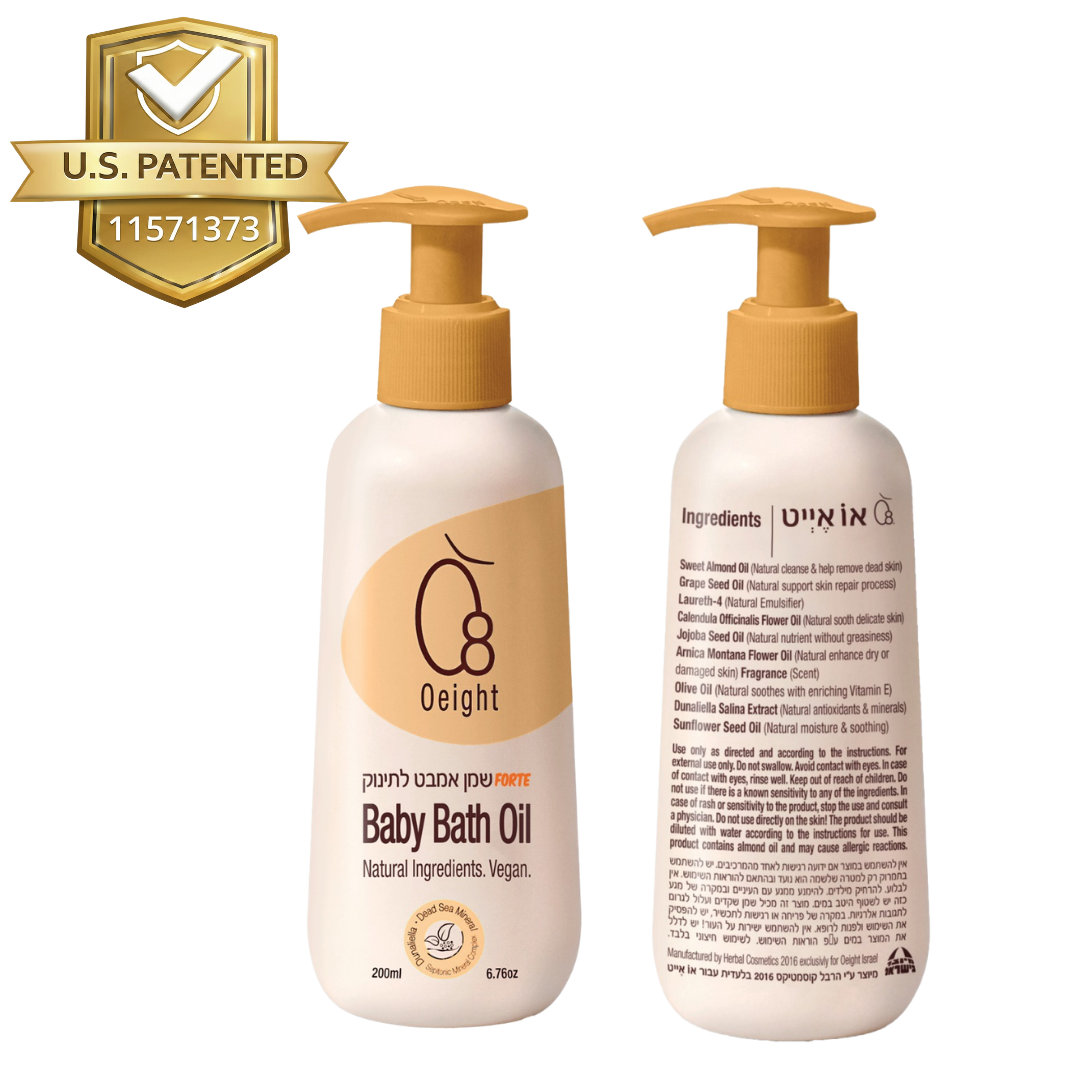
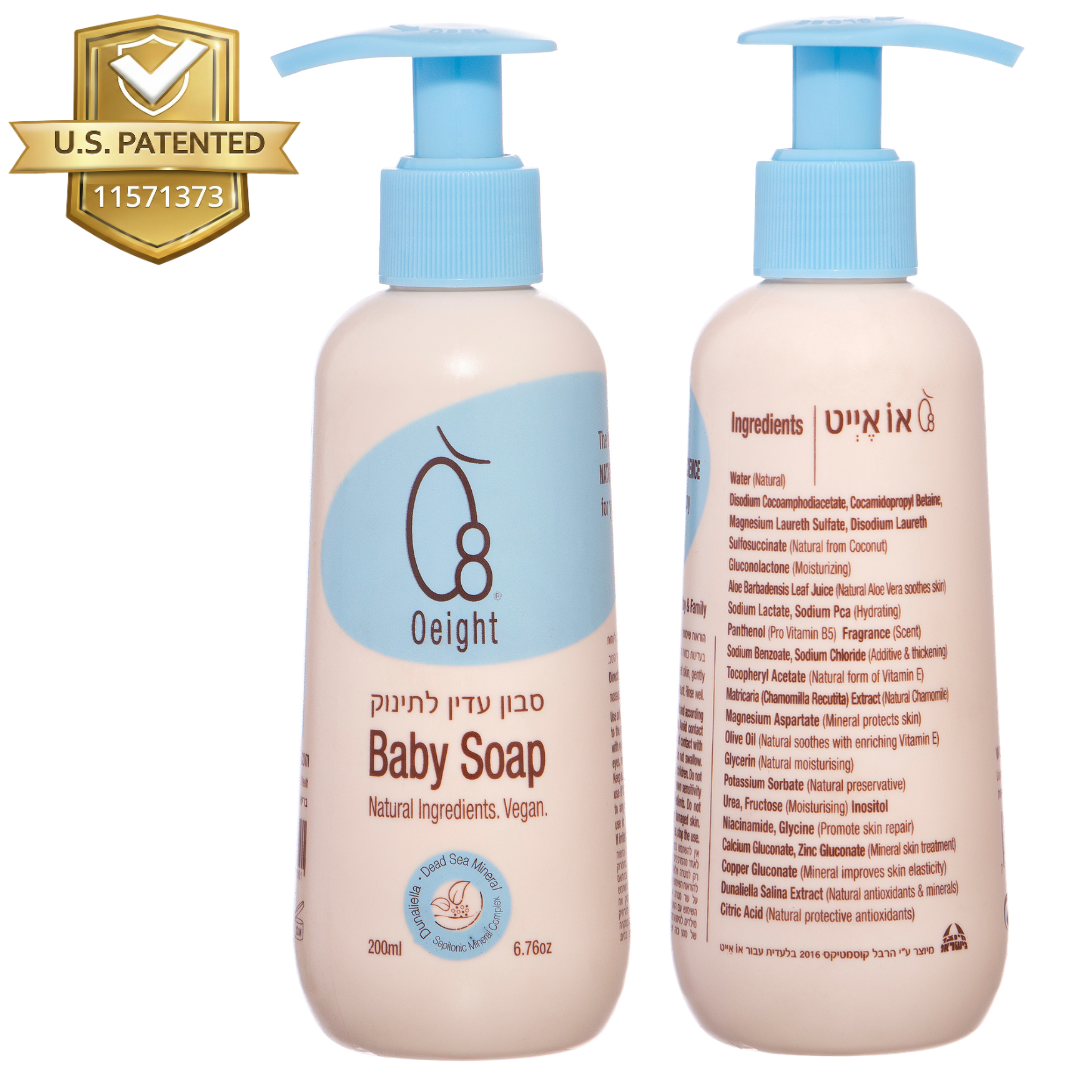
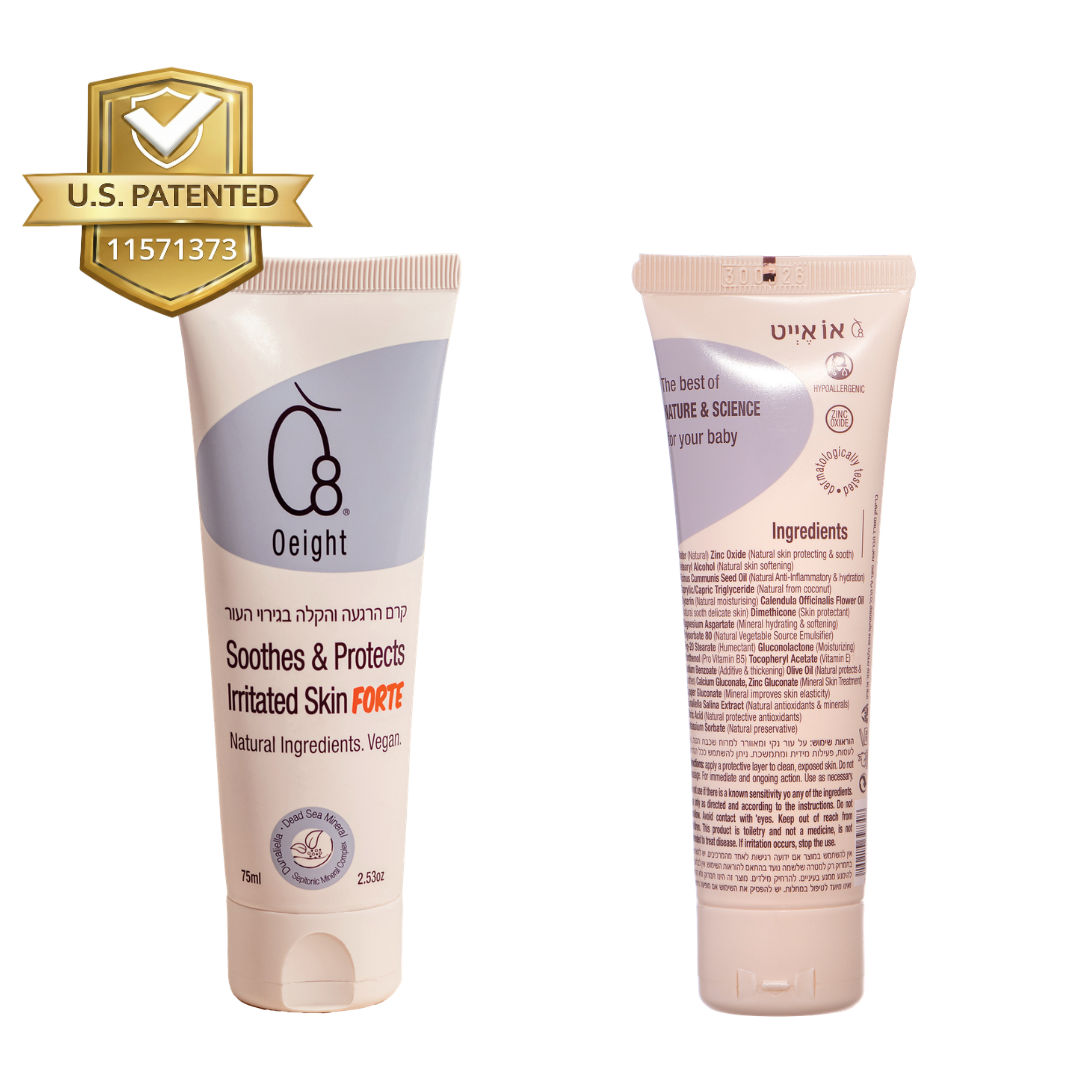
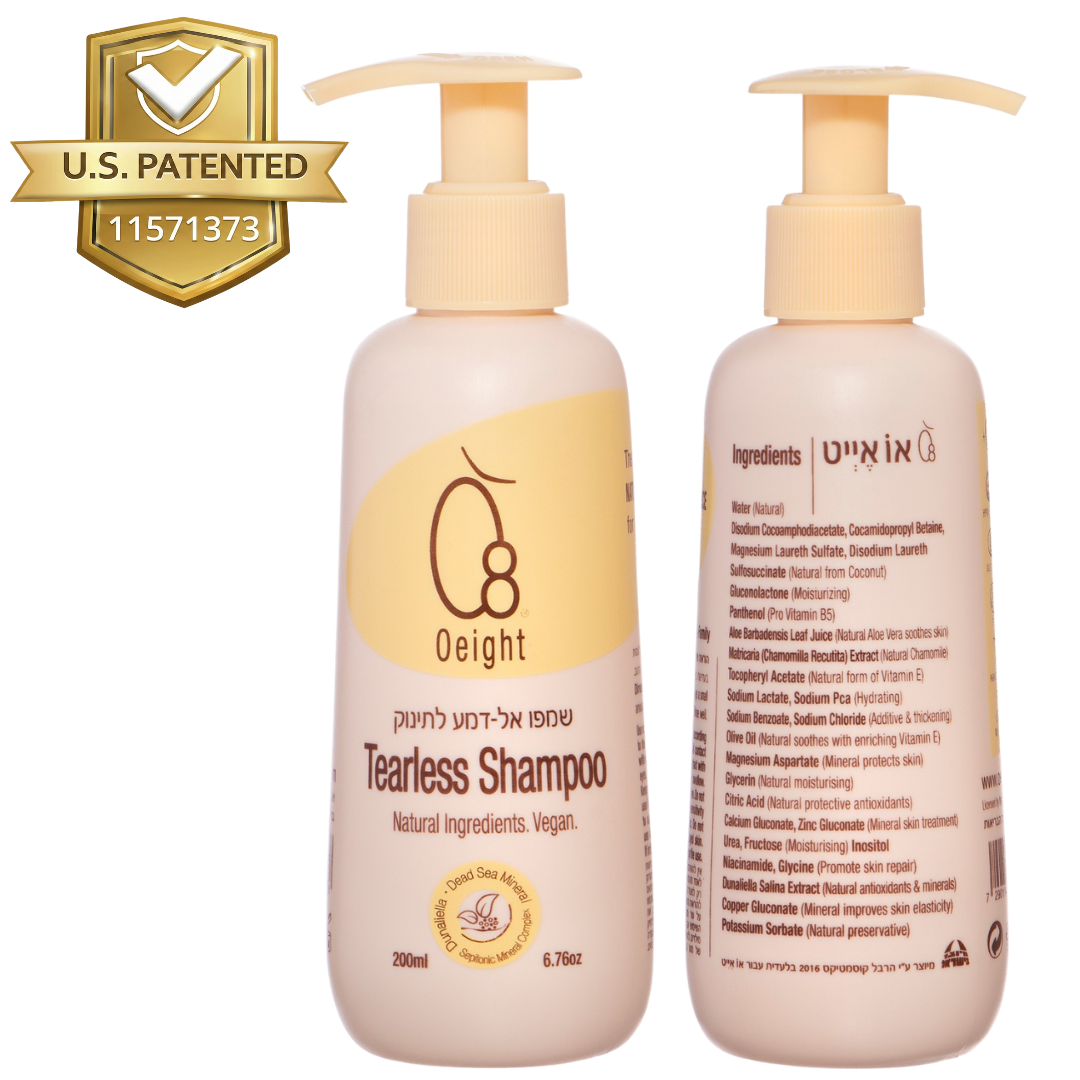
- Patented formulation - indicates proprietary, tested chemistry rather than off-the-shelf base
- Full INCI ingredient list visible on the label - transparency over marketing
Where Oeight fits in the natural baby skincare category
In skin care work at Oeight, one principle stays consistent: infants with reactive skin usually do better with simple routines, zero synthetic fragrances, and fewer unnecessary ingredients because fragrance exposure often adds irritation without adding therapeutic value.
That principle is built into the brand's identity - "Protecting their skin, preserving their scent." Heavy perfumes on a newborn don't just risk allergic reactions; they also mask the natural skin scent that helps babies and parents bond.
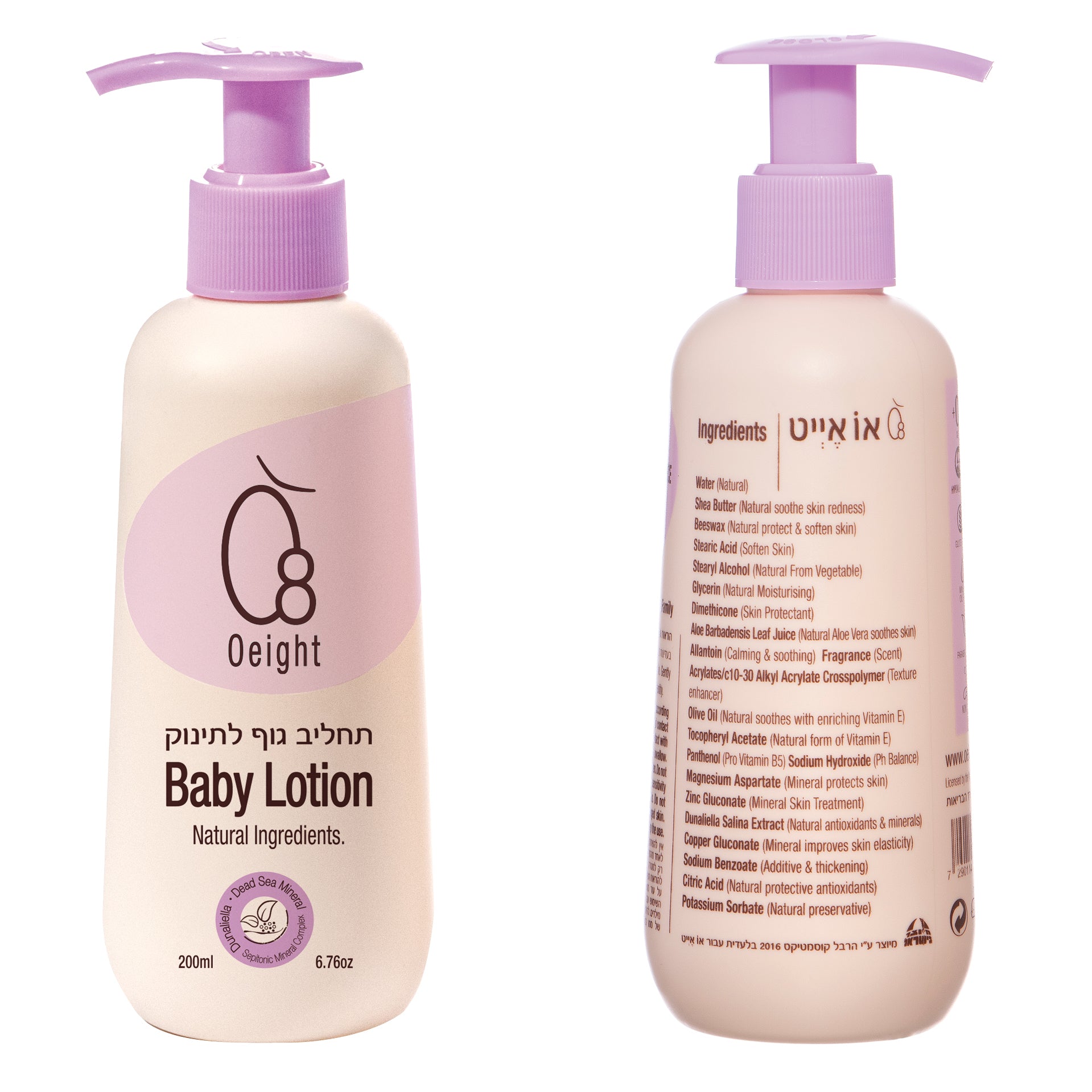
Oeight's formulations are built around Dunaliella Salina, a Dead Sea microalgae rich in beta-carotene, vitamins C and E, and omega fatty acids. The combination supports the skin barrier without the synthetic fragrance, SLS, or paraben profile that triggers most baby skin rashes in the first place. The brand's All-in-One and Highly Concentrated formats are designed to keep daily routines short - fewer products applied means fewer chances for irritant exposure. Smart, Architect-Designed Packaging keeps the contents clean and easy to dispense, which matters for parents managing flare-ups one-handed at 2 a.m.
How parents often compare natural baby brands
Parents shopping the premium natural category in the US often compare a few common names:
- Mustela - French heritage, dermatology-led, avocado perseose hero ingredient
- Weleda - European herbalist heritage, calendula-led
- Oeight - US-marketed, doctor-developed, patented Dunaliella Salina formula
Each takes a different ingredient philosophy. The right pick usually comes down to the baby's specific skin type, family history of allergies, and how each formula performs on the particular triggers that drive flares.

Frequently Asked Questions
Can baby eczema and heat rash happen at the same time?
Yes. An infant with atopic dermatitis can also develop baby heat rash in hot weather, and heat can worsen pruritus, which makes the skin look more inflamed overall. Treat each cause separately - cooling and breathable clothing for the heat rash, and a gentle emollient routine for the eczema.
Does heat rash always itch?
Not always. Heat rash often feels prickly or uncomfortable, while eczema is more strongly associated with persistent itching and dry skin (xerosis).
Is baby eczema caused by poor hygiene?
No. Baby eczema is linked more to genetics, skin barrier weakness, and triggers such as irritants or allergens than to cleanliness. Over-bathing actually worsens it.
Should I use moisturizer on heat rash?
Usually not a heavy one on sweaty areas. Thick occlusive ointments can trap heat, so cooling and breathable clothing are usually better first steps for heat rash treatment.
When is allergy testing helpful for eczema?
Allergy testing may help when eczema flare-ups clearly track with specific foods or environmental exposures like pet dander, dust mites, or pollen. It is not automatically needed for every child with eczema.
How do I tell if my baby has eczema or just dry skin?
Dry skin improves quickly with a fragrance-free moisturizer. Eczema is itchy, recurring, and inflamed - it doesn't simply hydrate away. If your baby is scratching, sleeping poorly, or the same patches keep returning, suspect atopic dermatitis and consult your pediatrician.
Can drool rash turn into eczema?
Drool rash and eczema are different conditions, but constant saliva exposure can trigger an eczema flare in a baby who is already prone. Protecting the skin barrier around the mouth during teething helps prevent that escalation.
Do baby rashes go away on their own?
Most do. Heat rash, drool rash, baby acne, milia, erythema toxicum, roseola, fifth disease, and mild diaper rash usually resolve within days to weeks. Eczema, yeast diaper rash, impetigo, ringworm, and bacterial skin infections typically do not - they need active management or medical treatment.
What's the safest cream for a baby's rash?
For irritant diaper rash: a zinc-oxide barrier cream. For dry or eczema-prone skin: a fragrance-free emollient designed for sensitive skin. For heat rash: nothing - keep the skin cool and dry. For poison ivy: calamine lotion. Never apply topical corticosteroids without a pediatrician's guidance.
Is heat rash dangerous for babies?
Most heat rash is harmless and clears within days once the baby cools down. Watch for fever, lethargy, or vomiting alongside the rash - those can signal heat exhaustion, which is a medical emergency.
Can babies be allergic to "natural" or "organic" baby products?
Yes. Natural doesn't mean non-allergenic. Essential oils, botanical extracts, and even oat proteins can act as allergens in sensitive babies. When in doubt, patch-test a new product on a small area of your baby's arm for 24 hours before full use.
When should I worry that it's not just eczema but a viral rash?
If the skin rash is accompanied by fever, cough, runny nose, red eyes, mouth sores, or unusual fatigue, suspect a viral exanthem like roseola (human herpesvirus 6), fifth disease (parvovirus B19), hand, foot, and mouth disease, measles, or chickenpox (Varicella-Zoster virus). Eczema by itself doesn't cause systemic illness.
Are oatmeal baths really safe for babies?
Yes - colloidal oatmeal is one of the few home remedies with strong evidence behind it for eczema and itchy skin conditions. Use lukewarm water, limit baths to 10–15 minutes, and apply moisturizers immediately afterward. For infants under 6 months, check with your pediatrician first.
How often should I bathe a baby with sensitive skin or eczema?
Three to four short baths per week is plenty for most babies. Daily bathing dries out the skin barrier and worsens eczema. Always apply a fragrance-free moisturizer within 3 minutes of getting out of the bath, while skin is damp, to lock in skin hydration.
Key Takeaways
- The four-question rule - dry or sweaty, patchy or pinpoint, did heat trigger it, does cooling help - is the fastest way to separate baby eczema from heat rash.
- Eczema reflects chronic skin barrier dysfunction. Heat rash reflects blocked sweat ducts and trapped sweat. The mechanisms are completely different, and so is the treatment.
- The "diaper area rule" is useful. Eczema usually avoids the diaper area; rashes there are almost always diaper-related.
- Fever changes the picture entirely. A rash with fever points toward roseola, fifth disease, hand, foot, and mouth disease, chickenpox, or measles - not eczema or heat rash.
- Read the label, not the marketing claim. Synthetic fragrance, SLS, parabens, and dyes are the four ingredients most often behind product-triggered rashes in American babies.
- Call the pediatrician for any rash with fever, vesicles, rapid spread, honey-colored crust, or non-improvement after 3–4 days of home care.
- Fewer ingredients, fewer triggers, fewer flares. A simple routine usually outperforms a crowded bathroom shelf for rash-prone babies.
Careful observation, gentle skin care, and a fragrance-aware routine often prevent small skin problems from turning into recurring discomfort.
About this guide: This article is informational, written for American parents and reviewed against guidance from the American Academy of Pediatrics, American Academy of Dermatology, Cleveland Clinic, Mayo Clinic, the UK NHS, and peer-reviewed research from JAMA Dermatology. It is not a substitute for personalized medical advice. Always consult your pediatrician or a pediatric dermatologist for diagnosis and treatment decisions.
Last reviewed: May 2026. This guide is reviewed and refreshed every 4–6 months to reflect current pediatric dermatology guidance.
Sources cited:
- American Academy of Pediatrics, HealthyChildren.org - Eczema
- American Academy of Pediatrics, HealthyChildren.org - Heat Rash
- American Academy of Pediatrics, HealthyChildren.org - Diaper Rash
- American Academy of Dermatology, Atopic Dermatitis Symptoms
- Cleveland Clinic, Baby Eczema
- Cleveland Clinic, Diaper Rash
- Mayo Clinic, Heat Rash
- Nemours KidsHealth, Eczema (Atopic Dermatitis)
- National Eczema Association, nationaleczema.org
- UK NHS, nhs.uk
- JAMA Dermatology, Trends in the Prevalence of Eczema Among US Children 1997–2018
- Children's National Hospital, Pediatric Eczema